Unknown's avatar

The Rough Rider

Back when I taught a class on contemporary art a question often arose: Why don’t they put up meaningful statues that people understand instead of those obscure abstract sculptures?

Then I’d ask: How many of you know that sculpture in the park in front of the Portland Art Museum—the guy on the horse?

Most hands would rise.

Then I’d ask: Who is it?

I’d say that over the years less than 5% of my students could answer.

So much for “meaningful.”

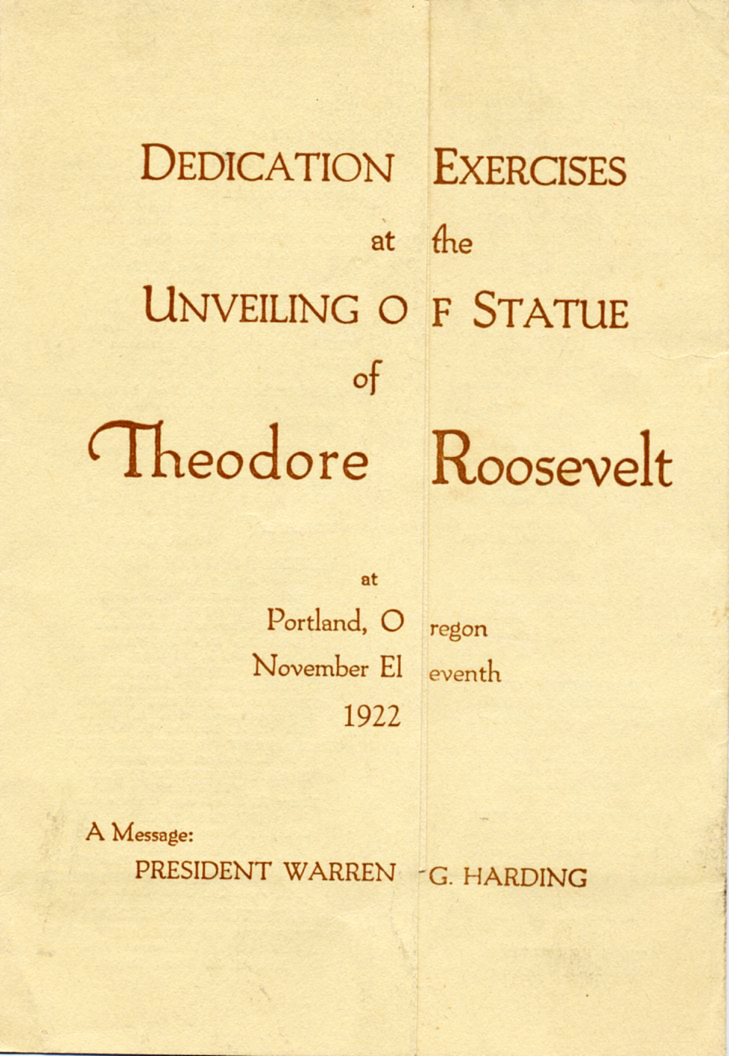
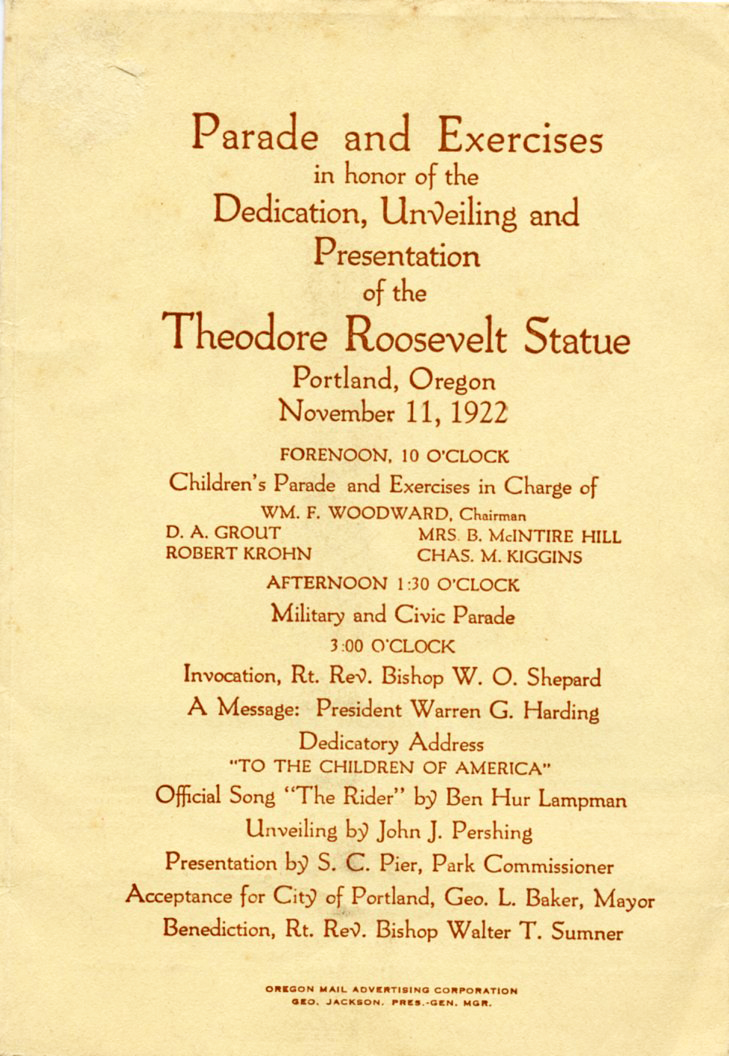
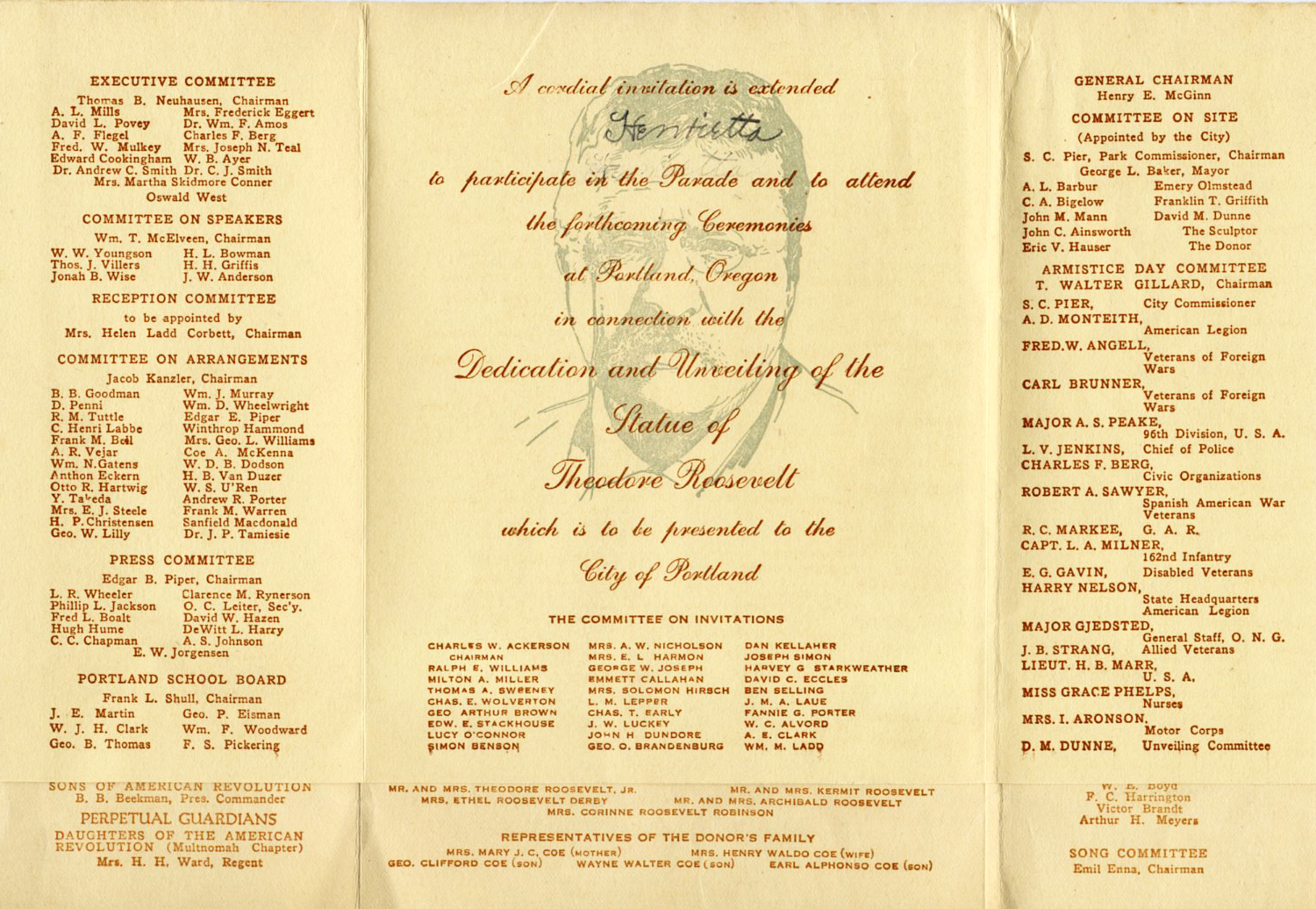
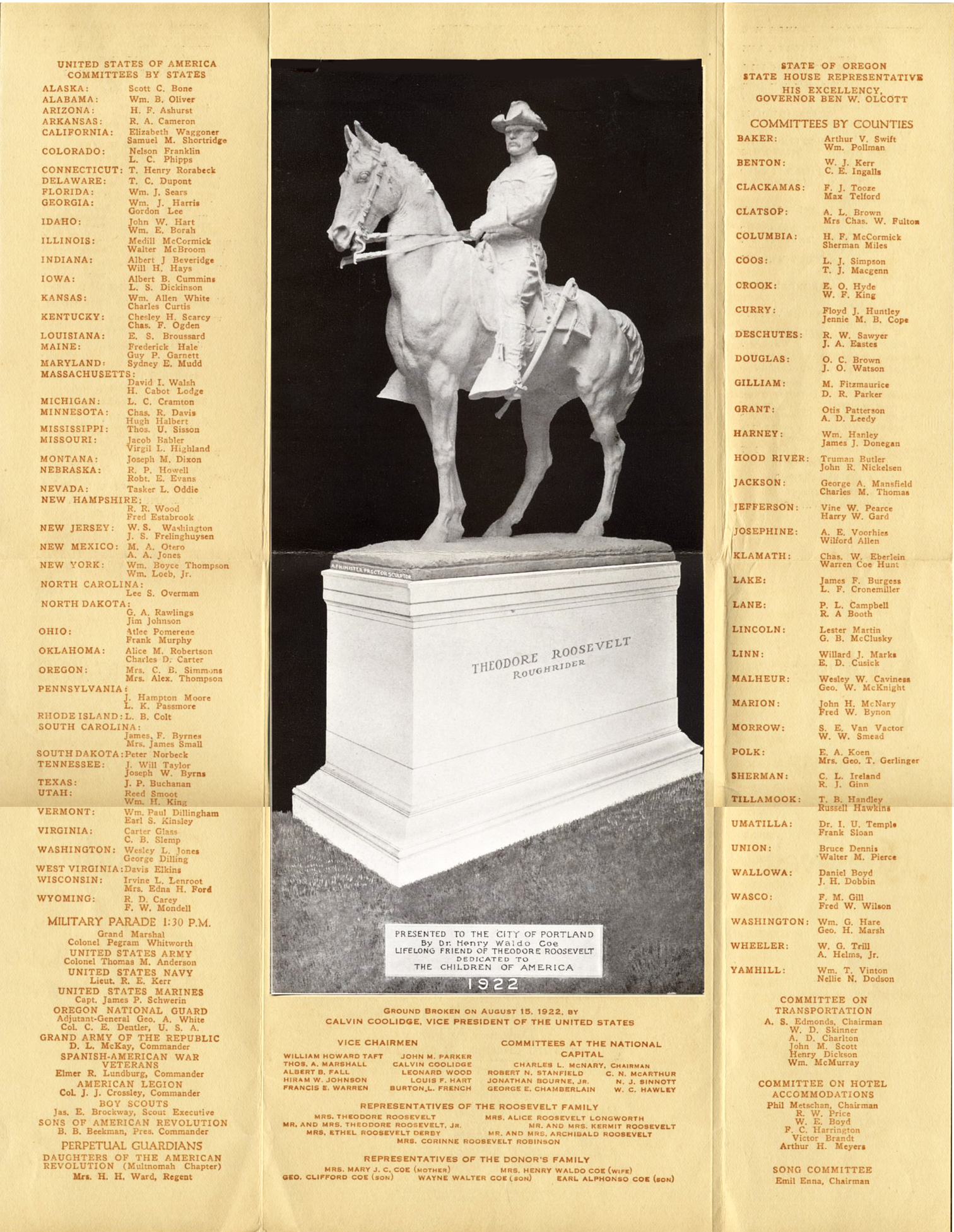
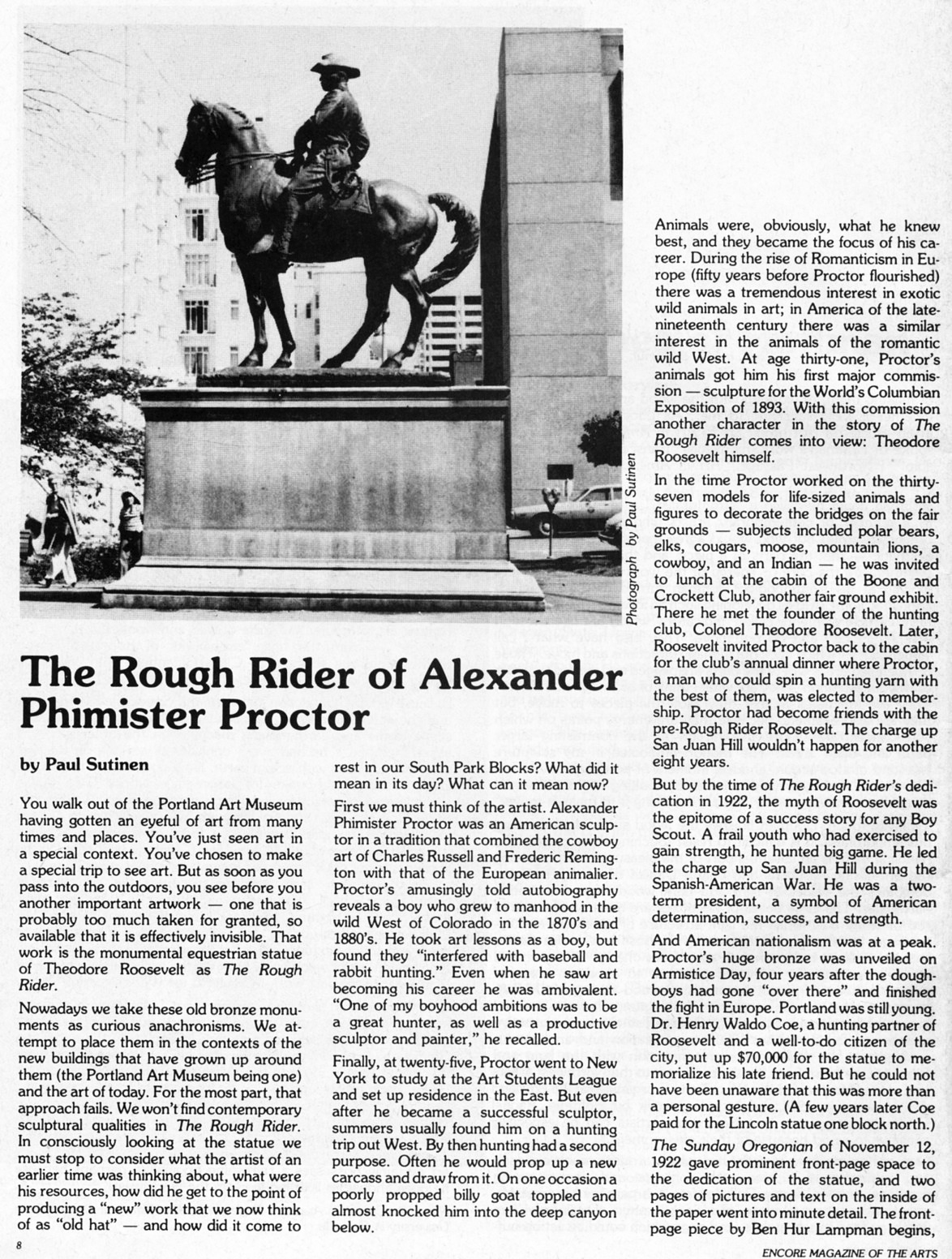
But I was intrigued by the work, and I wrote a piece about it for Encore magazine (before I began teaching), a magazine that was published for the Portland Opera and the Oregon Symphony. It turns out that the sculptor, Alexander Phimister Proctor, was a pretty interesting fellow, and the unveiling of the work in 1922 was a really big deal.

Proctor ADJ

Proctor007

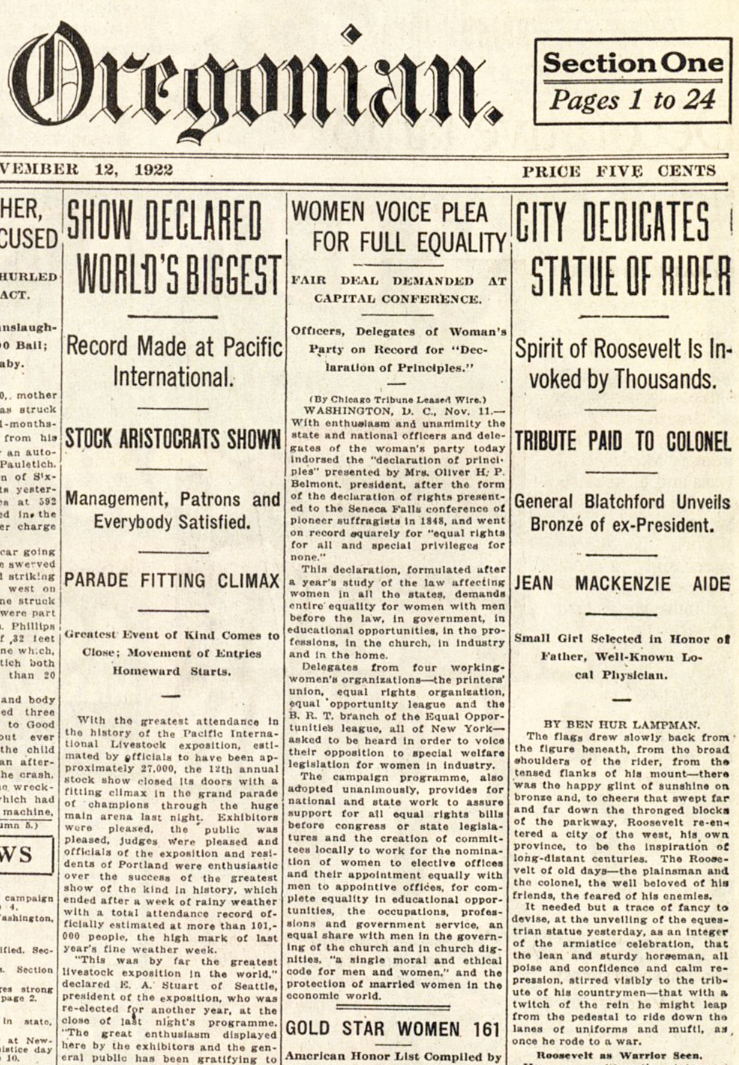
On July 16, 2000 The Oregonian published a reprint of page one from Armistice Day 1922 with the statue dedication noted in the right hand column.

OREG Proctor009

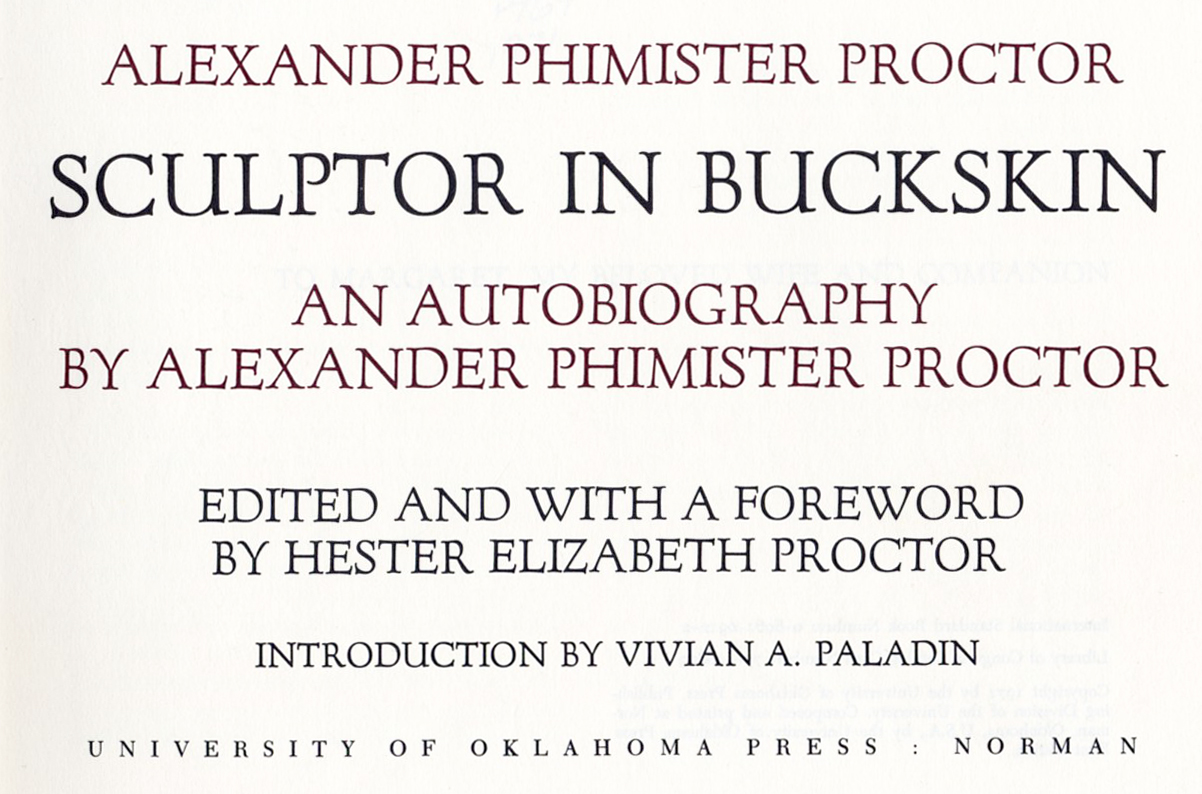
Proctor’s autobiography is very entertaining and there are a couple copies at Powell’s (and lots at abebooks.com).

Proctor010

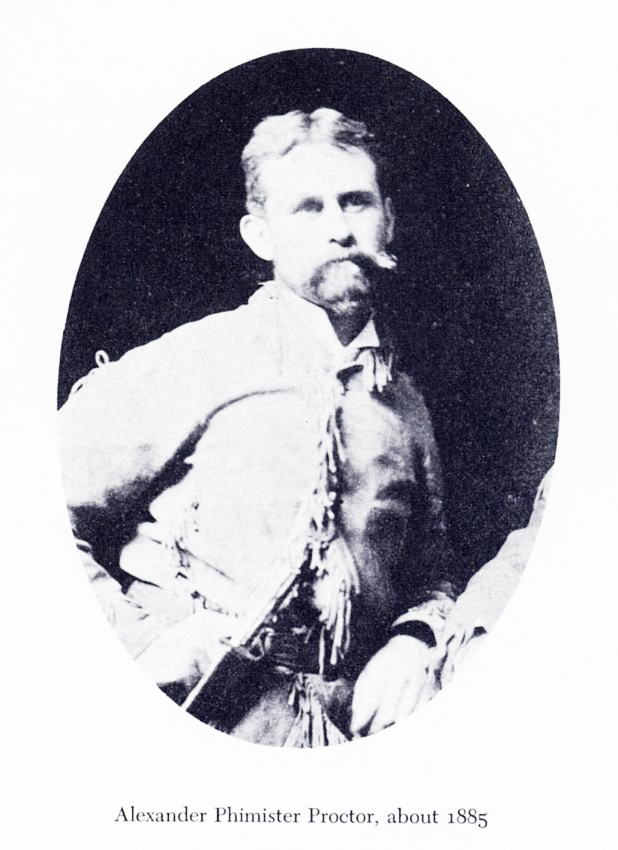
Frontispiece:

Proctor011

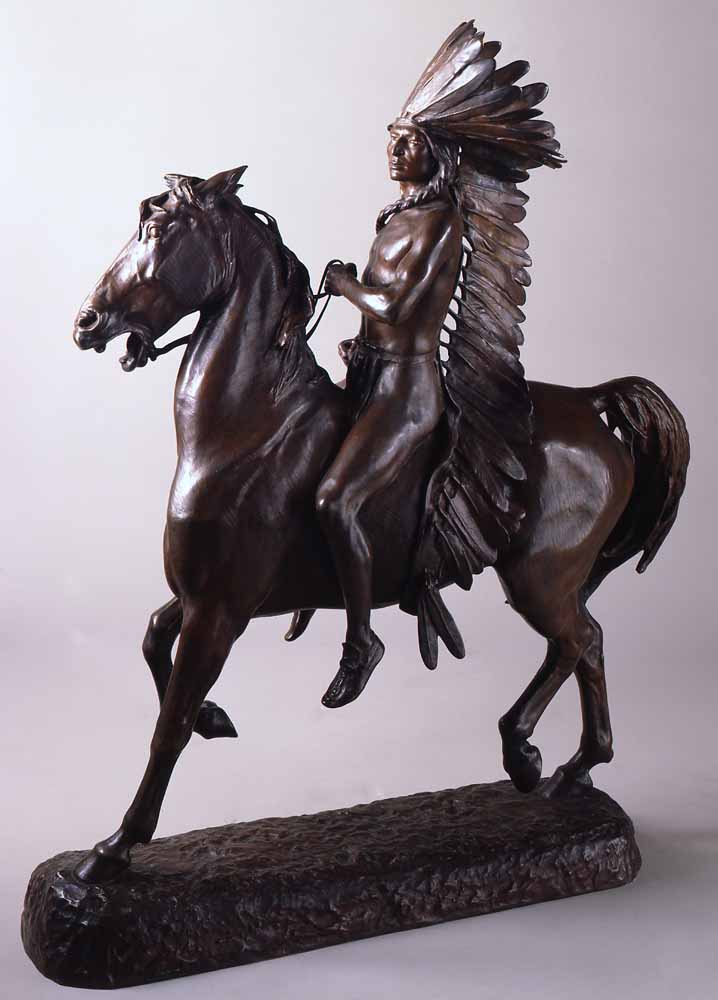
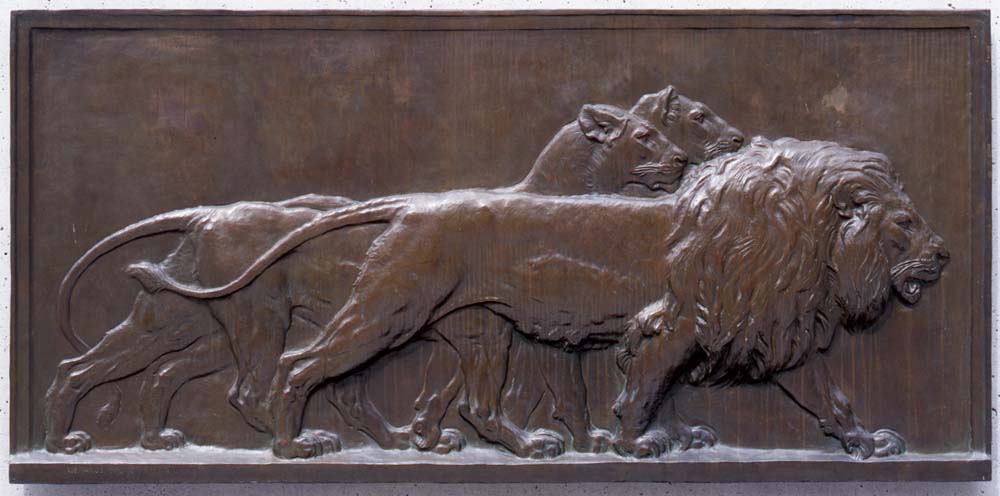
You can see other works by Proctor at the Portland Art Museum:

11.2

Indian on Horseback , 1898, bronze, Gift of Mrs. A.L. Mills, Mrs. T.H. Bartlett, Henrietta E. Failing, Mary Forbush Failing, Mrs. H.C. Cabell, Charles Francis Adams, John C. Ainsworth, William D. Cartwright, and T.B. Wilcox, © artist or other rights holder, 11.2

35.182

Lions , 1911, bronze, Bequest of Winslow B. Ayer, © artist or other rights holder, 35.182

Or if you are at the University of Oregon you can see:

OLYMPUS DIGITAL CAMERA

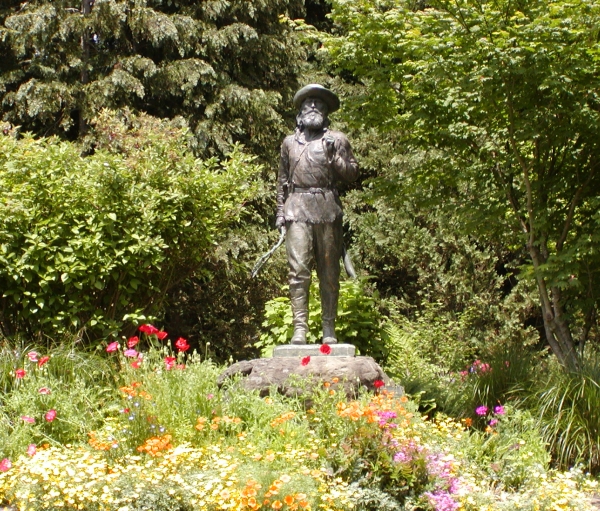
The Pioneer, which predates The Rough Rider. From the U of O web site: This sculpture, located across from Johnson Hall, was dedicated with great ceremony in May 1919. The sculptor, Alexander Phimister Proctor (1862-1950), used a trapper from near Burns, Oregon, as his model. The 1918 bronze statue, mounted on a base of McKenzie River basalt, was a gift of Joseph N. Teal, Portland attorney.

And:

U of O Mother

The Pioneer Mother, 1930—according to the U of O web site, but from Sculptor in Buckskin…

Proctor working on PiMother

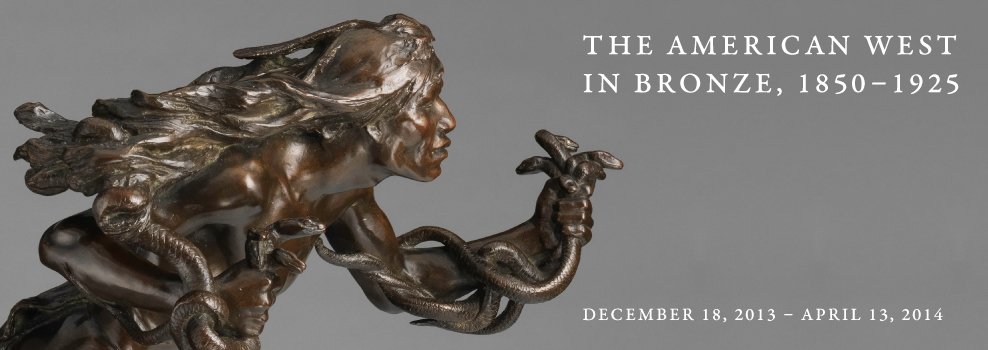
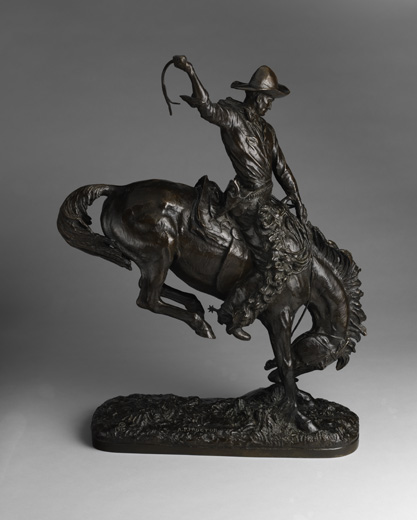
And, there are works by Proctor in this new exhibition at the Metropolitan Museum of Art in New York:

Exhibition-landing

From the Met’s web site:

slide13

Buckaroo, 1914 (cast 1915 or after). Denver Art Museum, Funds from William Sr. and Dorothy Harmsen Collection by exchange (2005.12)

slide12

Stalking Panther, 1891–93 (cast ca. 1905–13). Corcoran Gallery of Art, Washington, D.C., Bequest of James Parmelee (41.79)

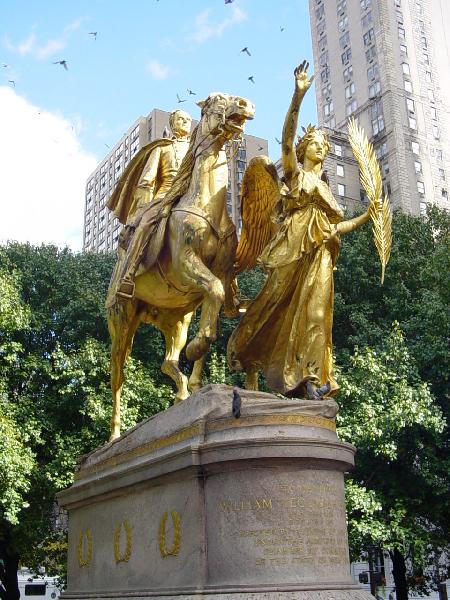
And, if you are in New York and see the William Tecumseh Sherman monument in Central Park note that the whole is by Augustus St. Gaudens, but Proctor did the horse:

1464

Unknown's avatar

Macedonian tires

I got around to the November gallery shows on the last Saturday of the month. As I walked into Chris Rauschenberg’s exhibition of pictures from Macedonia at Nine Gallery the first image I saw was this one:

IMG_6827

And I wondered why I like seeing stuff like this. (BTW, Chris is a good friend of mine and I’ve been seeing his “stuff like this” for about 35 years.)

I thought of a couple of my favorite quotes from John Cage:

Beauty is now underfoot wherever we take the trouble to look.  

and

The first question I ask myself when something doesn’t seem to be beautiful is why do I think it’s not beautiful. And very shortly you discover that there is no reason.

But noticing something for oneself is not what art is. Art is about telling someone else about it in a way that gets their attention. And that was what I thought as I looked at Chris’s picture. I realized that it is about framing. But not just in the way that the open door and the wall “frame” the stack of tires—I’m thinking of framing in terms of what all is included with the thing that you found interesting. After all, Chris could have poked his lens all the way through the open doorway and given us just a shot of just the stack of tires (and maybe he did that, too, but he didn’t show that one). He gives us a peek, not a monument in close up.

And the framing is also where the outer rectangle is—is the thing big or small, the center of the pic or out at the edge? How do we, as the viewer, confront the thing?

And are the other items in the artwork clutter, or foils? The rightly chosen words, the exactitude of musical notes, etc.—not just in visual art—the main idea and the “framing” around it.

How does the artist tell us about it?

But all that, after a lot of practice, becomes instinct…

The master said, “If you want to see, see right at once. When you begin to think, you miss the point.” (Zen and Japanese Culture, Daisetz T. Suzuki, Princeton University Press, 1971.)

Composition must occur in an instant, like a woodcutter felling a huge tree, or a swordsman leaping at his enemy. It is also like cutting a ripe watermelon with a sharp knife or taking a large bite at a pear. (Matsuo Basho in The Essential Haiku, Robert Hass, Harper Collins, 1994.)

And Chris’s picture made me think of haiku like these little observations:

By Basho…

Coming along the mountain path,
I am somehow mysteriously moved
by these violets.

Autumn moonlight—
a worm digs silently
into the chestnut.

It would melt
in my hand—
the autumn frost.

and by Yosa Buson…

An iris
spattered with the droppings
of a hawk.

Everyday stuff for those haiku poets, like a stack of tires (even in Macedonia) is for Chris. And if you find pleasure in a stack of tires in one of Chris’s photos, you might find incidents like that in everyday life pleasurable. That’s a cool thing for art to do.

It seems that the main focus of painting is to give pleasure: if someone can receive pleasure from looking at paintings, then that’s the best thing that can happen.  Robert Ryman

Unknown's avatar

20 Questions for Carl Andre—June, 1980

I had the good fortune to grow up as an artist in Portland during what I now think of as its early renaissance. Portland Center for the Visual Arts was founded in 1972 (and lasted until 1988). Blue Sky Gallery opened in fall 1975. The Northwest Artist’s Workshop, in 1976. Blackfish Gallery, 1979. The Art Gym at Marylhurst University, 1980. All of these were essentially DIY artists’ projects.

From 1974-1983 I was the art critic for Willamette Week. I wasn’t making much money then and half my income was from the 3 cents per word that I got as a WW freelancer. But I got to talk to some art stars. I interviewed Christo, Dan Flavin, Robert Rauschenberg, Robert Irwin, Judy Chicago, Vito Acconci, Roy Lichtenstein. Those tended to be longer articles than straight reviews and easier to write.

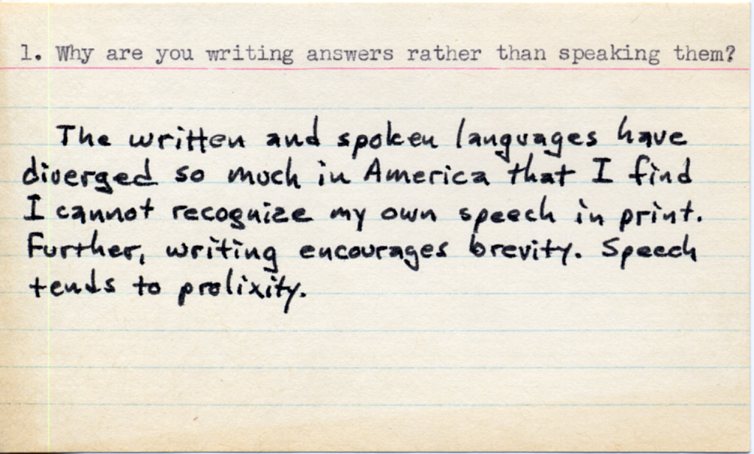
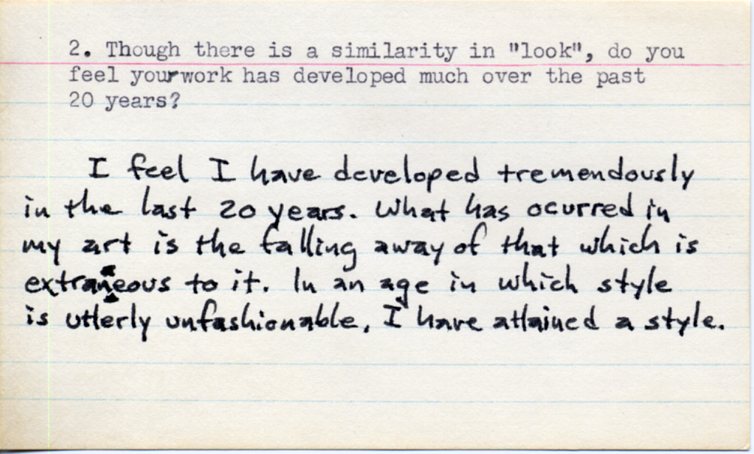
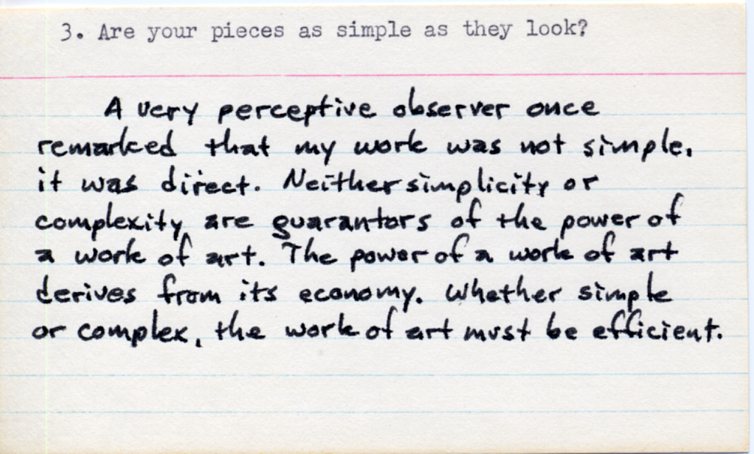
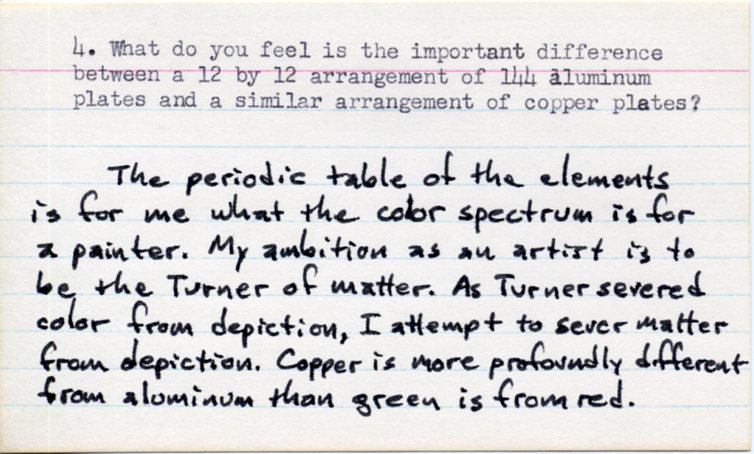
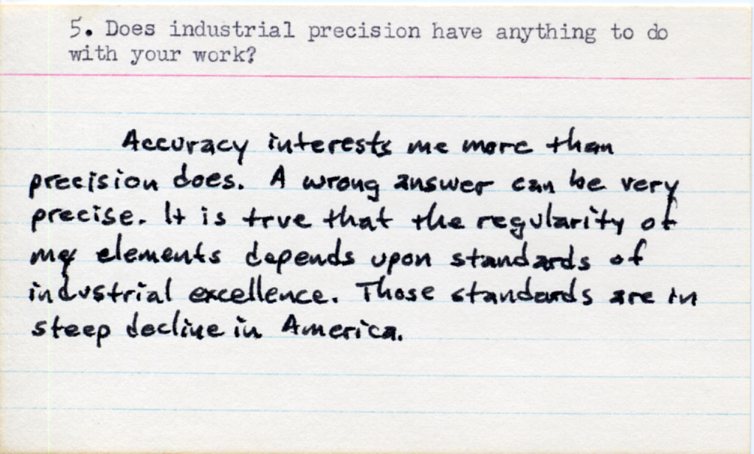
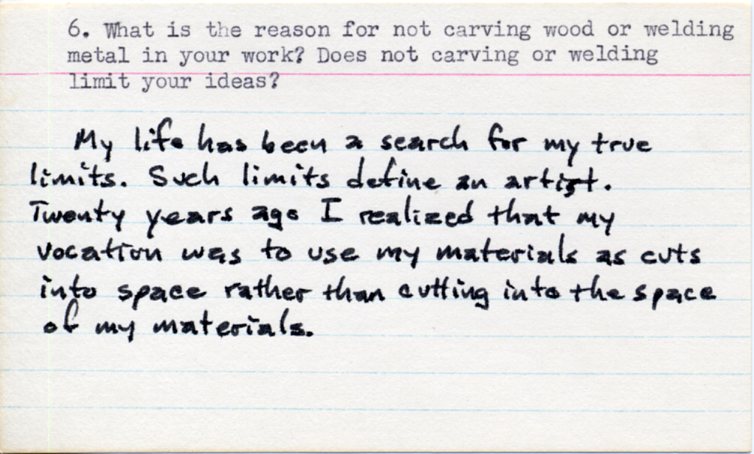
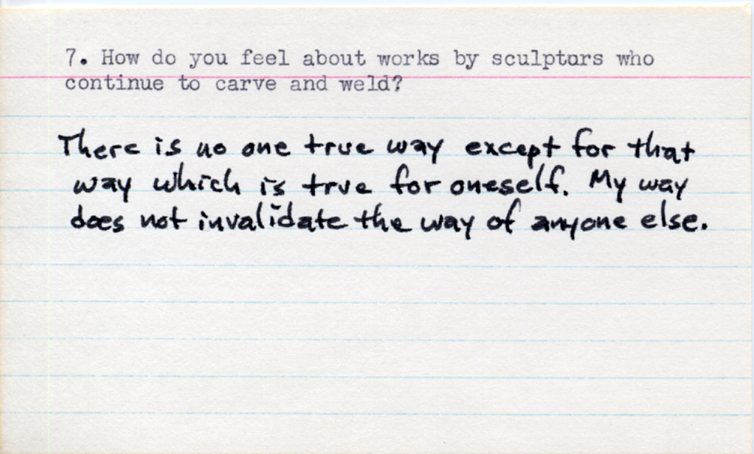
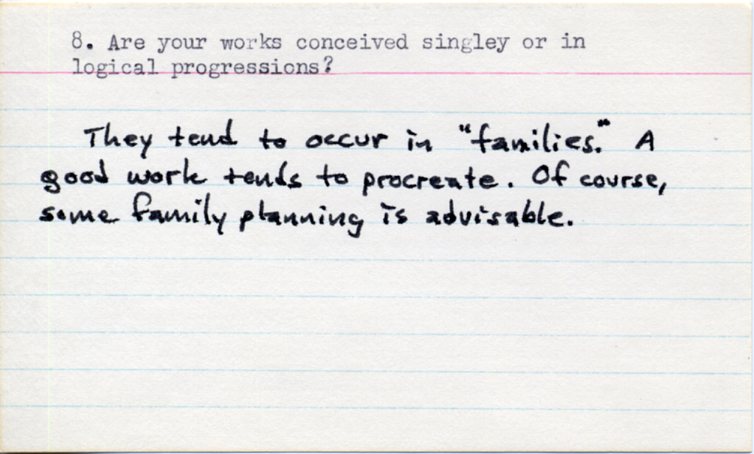
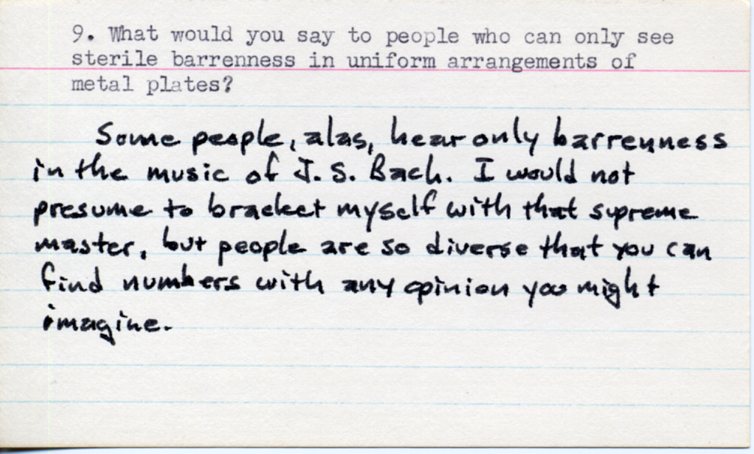
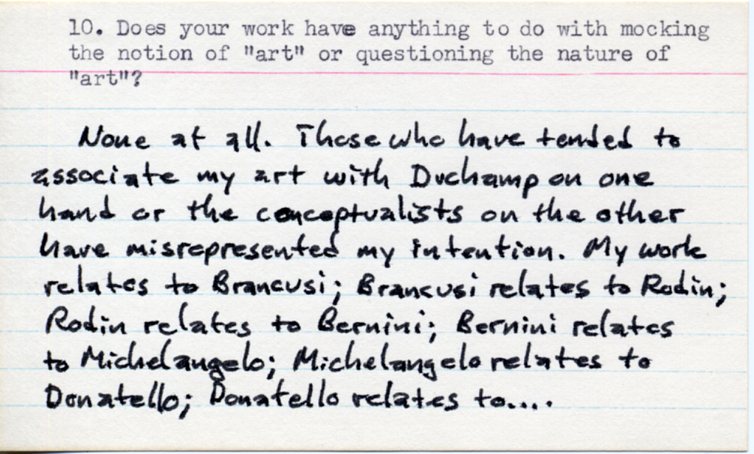
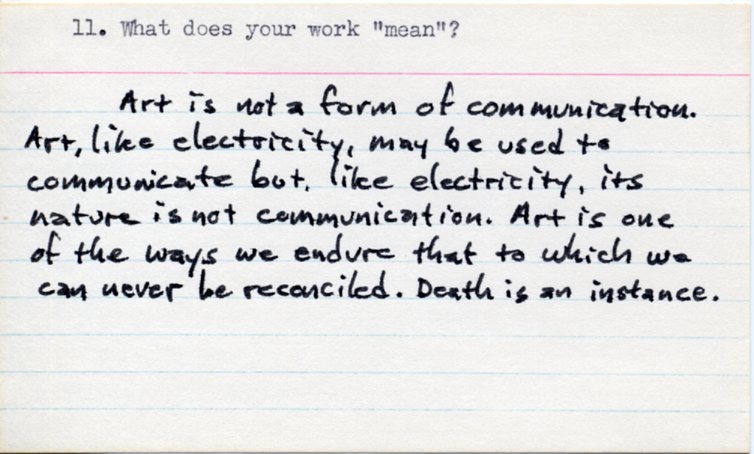
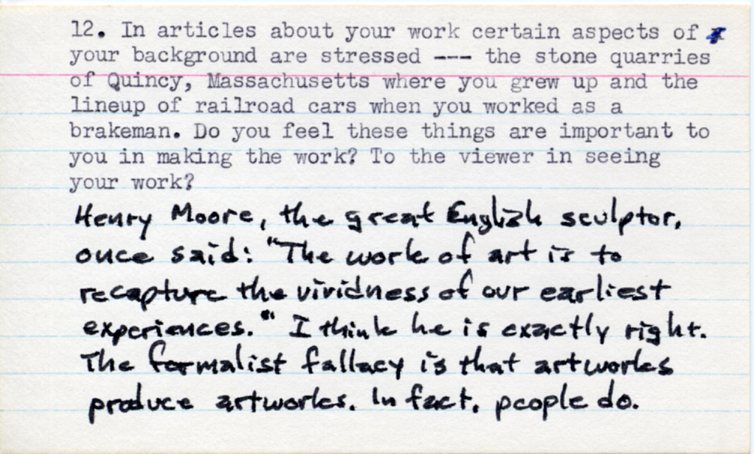
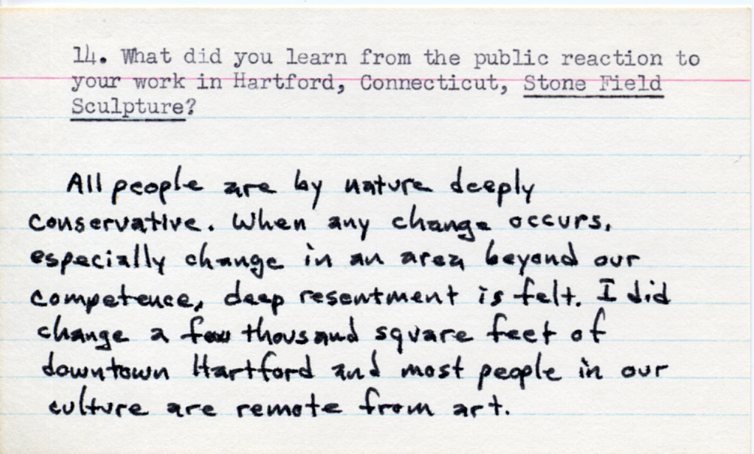
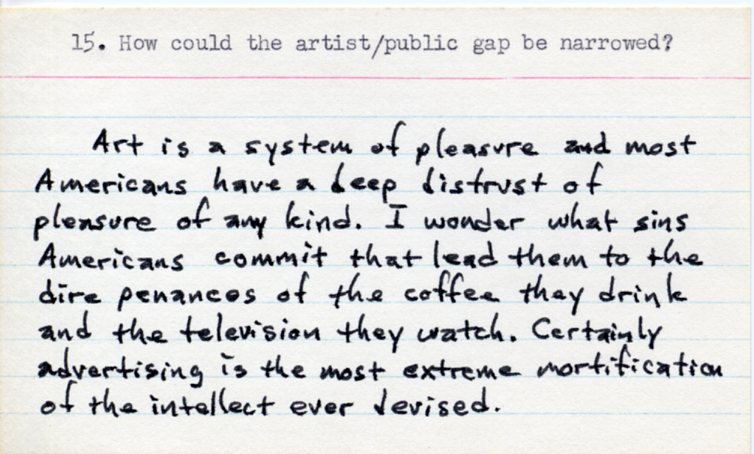
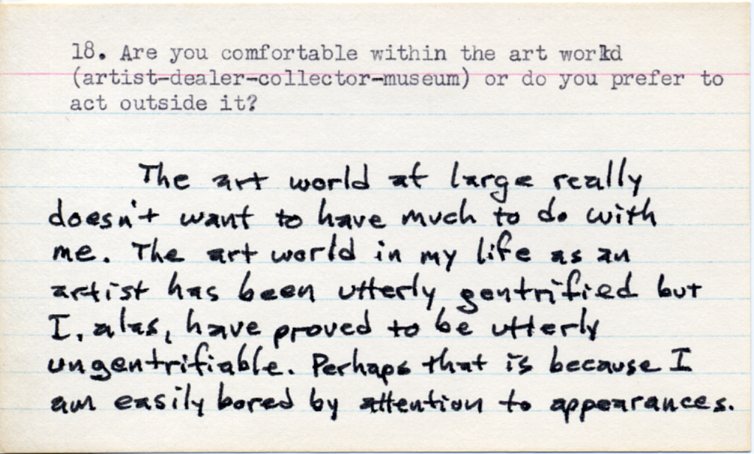
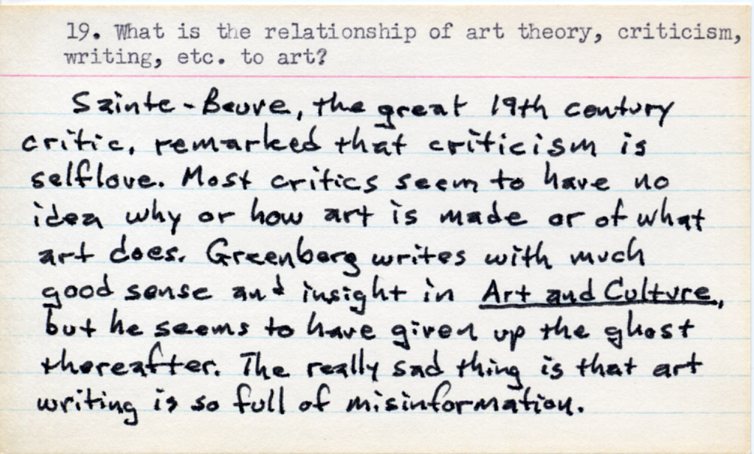
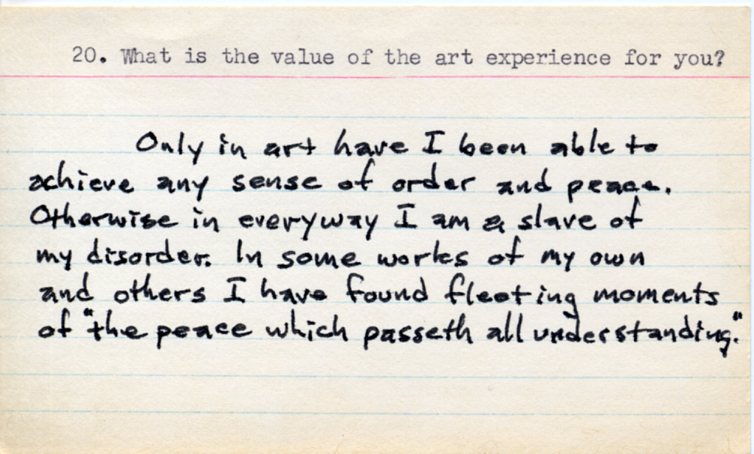
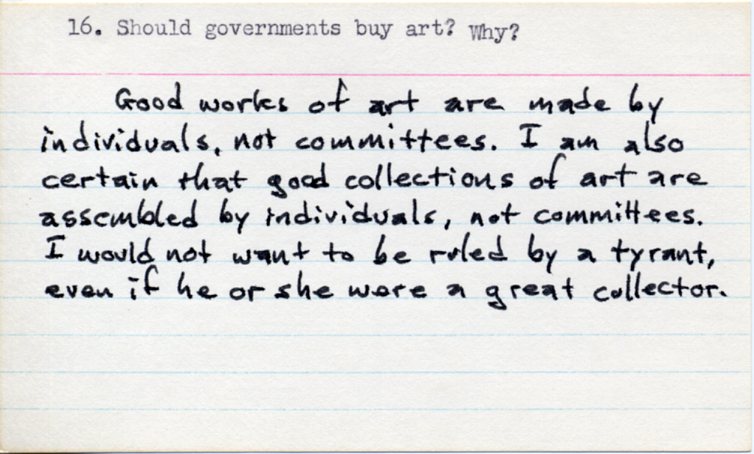
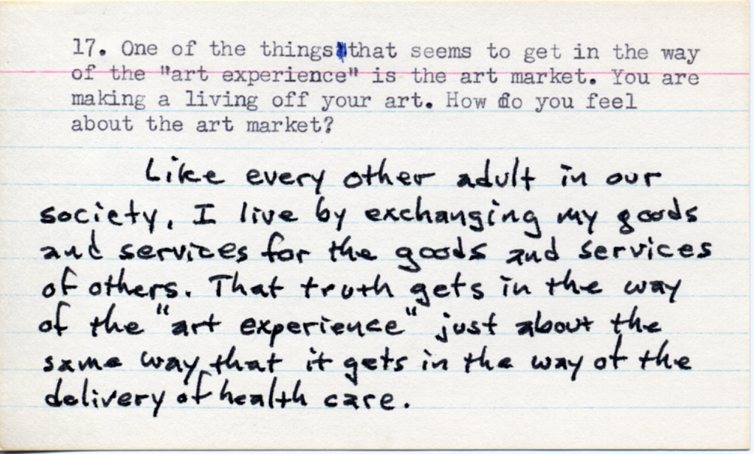
Carl Andre had an exhibition at PCVA in 1973, before I was writing. But in 1980 Mel Katz arranged for him to come to Portland State University. Along with a public talk, there was an exhibition of two of Andre’s works (see below). I arranged to interview Andre, and as I recall we went to Burger King, then at Burnside and Broadway. It was there that Andre told me that he didn’t do recorded interviews anymore. My heart sank. There goes lots of 3 cent words. BUT, he suggested that I send him interview questions on 3×5 cards. So I did.  And he sent them back:

Andre000Andre002 Andre003Andre004 Andre005 Andre006 Andre007 Andre008 Andre009Andre010 Andre011 Andre012 Andre013 Andre014 Andre015 Andre016  Andre017

Andre022

Andre018 Andre019 Andre020

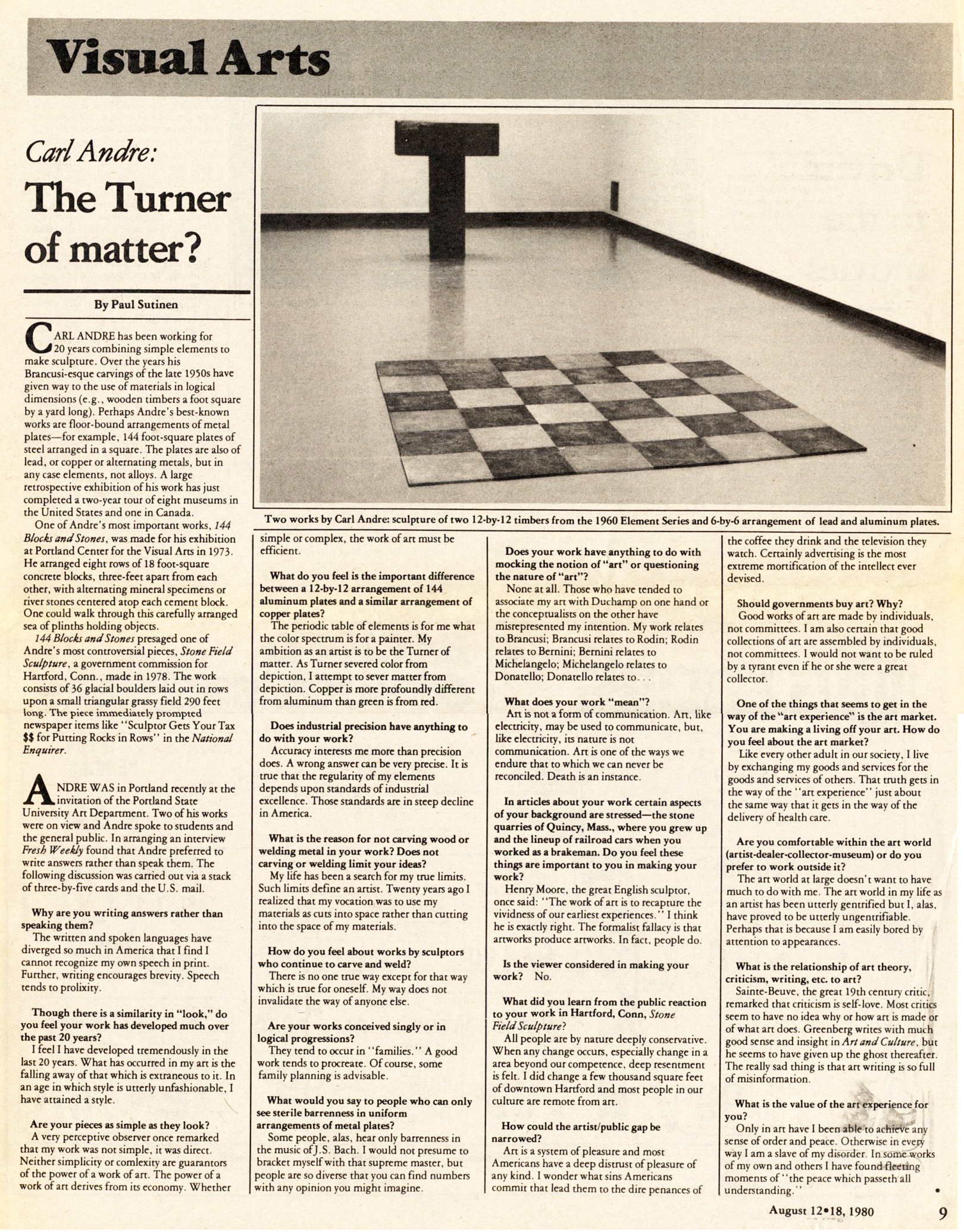
This interview was published in Willamette Week in August 1980.

WW Andre

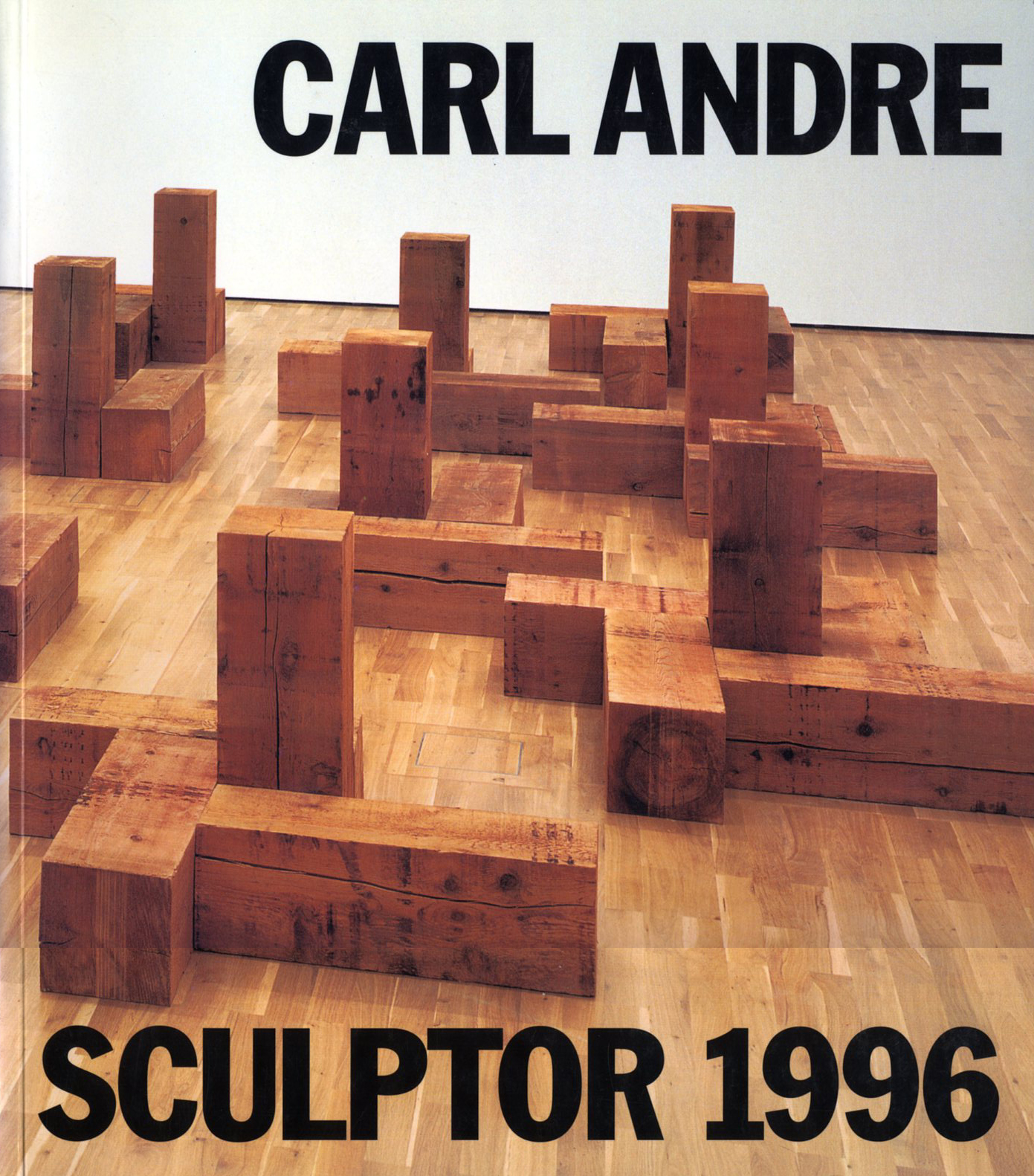
Later, much to my surprise, I found that the interview was published in this catalog accompanying a big Andre exhibition in Germany. I only found out about it by seeing my name in the listing of an art book dealer.

1996 Book

Unknown's avatar

Writing as Thinking: Rothko Bridge Redux

Something that I’ve told students for a long time is that you never know what you really think until you write it down. After writing two posts about the Rothko Bridge proposal and considering the ideas of others who have discussed the concept, I think I’m getting a better focus for myself as to the sides of the argument and what causes the position that I’ve instinctively taken.

Many years ago I was an art critic. A good friend and once editor told me that the fundamental question for criticism is: What causes this? It is important not to be satisfied with the initial like/don’t like reaction, but to think further to try to figure out what it is in the work that causes your feelings.

As I look back at my posts, I can see myself trying to put my finger on what has caused me to feel that something was really wrong with the Rothko Bridge idea, and with this post I hope I can pin that down.

I think this is the crux of the matter:

Those who promote the concept see it as finally recognizing someone who is somehow a hometown boy— “Portland has a hard time acknowledging highly ambitious people,” says Jeff Jahn (BTW, I have no idea what he is talking about here). We could note that Rothko hasn’t been sufficiently acknowledged by Portland since he and some of his students had a show at the Portland Art Museum in 1933. Naming the new bridge after Rothko would somehow make up for this slighting.

I see the bridge naming as too big, too irrelevant, and too late.

The Portland Art Museum has not managed to acquire a major Rothko painting in the 43 years since Rothko’s death. There was a time in the last four decades when a major Rothko could be had for less than 30 million dollars. Probably not now. The opportunity for meaningful recognition in the “art” sense has passed. (Note invitation to MAJOR DONOR.)

And Portland State University could have named something for Rothko as he attended Shattuck School and Lincoln High School buildings now part of the PSU campus. But they didn’t.

The Park Blocks near these buildings could have been renamed “The Rothko Blocks,” but they haven’t been.

So, Portland has dissed Rothko by 80 years of indifference.

But now we want to USE HIS NAME. That’s how I see it. If we pretentiously use the name of Mark Rothko for this bridge that has no significant relationship to him it will be to aggrandize Portland through the Rothko brand.

So the supporters see the idea as a sign of respect—and I see it as an ostentatious lack of respect. I agree that we will disagree.

Also:

Barry Johnson has posted Naming the new Willamette River bridge after Mark Rothko isn’t such a good idea on Oregon Arts Watch (www.orartswatch.org/news-notes-passes-on-the-rothko-bridge/). An important point that Barry makes is that the bridge isn’t much in a forward-looking design sense, so why saddle the Rothko name with it?

And:

A late thought that I had was about the dispersal of Rothko’s work after his death. So I came across an article from the New York Times: ROTHKO FOUNDATION GIVES 1,000 WORKS TO 19 ART MUSEUMS by Michael Brenson, May 4, 1984. The main facts:

The National Gallery of Art in Washington [received]… 285 paintings and works on paper, as well as 500 to 600 sketches, drawings and other study materials…

The Metropolitan Museum of Art, the Museum of Modern Art, the Solomon R. Guggenheim Museum and the Whitney Museum of American Art [were given] between one and five paintings…

The other institutions that [were] given between 1 and 15 works are The Albright-Knox Art Gallery in Buffalo; the Los Angeles County Museum of Art; the Museum of Contemporary Art in Los Angeles; the San Francisco Museum of Modern Art; the Walker Art Center in Minneapolis; the Art Institute of Chicago; the High Museum of Art in Atlanta; the Fogg Art Museum in Cambridge, Mass.; the Yale Art Gallery; the Tate Gallery in London; the Stedelijk Museum in Amsterdam; the Louisianna Museum in Denmark; the Israel Museum in Jerusalem, and the Tel Aviv Museum. (www.nytimes.com/1984/05/04/arts/rothko-foundation-gives-1000-works-to-19-art-museums.html)

What’s missing in this list? Yup. The Portland Art Museum. The Rothko Foundation gave 300+ paintings to art museums, but didn’t think enough of his “home town” to place any significant works here.

Unknown's avatar

Rothko Bridge? Another thought…and a proposal

I see that Jeff Jahn has repeated his thought that the new bridge be named for Mark Rothko. On PORT he says:

I’ve updated the both very popular and controversial post on the Rothko bridge naming. I see it as cutting a provincial gordian knot… so many (especially those who have been in Portland a long time) put a lot of effort into denying that the city’s most famous and accomplished resident ever lived here or had any real connection. The sentiment doesn’t hold up to the facts and illustrates why Portland has a hard time acknowledging highly ambitious people (provincialism). It is a good thing to get over.

That has led me to think further about this idea.

I don’t know who those “many” are who would be silly enough to deny “that the city’s most famous and accomplished resident ever lived here or had any real connection.” Why would anyone deny that Rothko lived in Portland from 1913-1921, from ages 10-18 and that he went to Shattuck School, now Shattuck Hall at Portland State University, and Lincoln High School, now Lincoln Hall at PSU? The evidence is clear in James E. Breslin’s authoritative Mark Rothko: a biography (“an excellent resource,” as Arcy Douglas said on PORT , June 17, 2009). Who could argue with that?

Perhaps it could be claimed that it was Portland, the city and its resources that gave the foundation for Rothko’s life after he left , but I have seen no compelling evidence of that (Later in life Rothko claimed that had he “remained in Portland, he would have been a bum,” [Breslin]). Perhaps Dvinsk, Russia should name a bridge for Rothko. As Breslin says:

Rothko’s desire to create artistic works that would provide a place for him, his difficulty in accommodating these creations to the real world of restaurants, museums and viewers, his combativeness, his prophetic ambitions, his intense desire for success, his guilt about success, his uncompromisingness, his compromises, his propensity to isolate himself, his wish for community, his mixed feelings about both wealth and poverty, his suspicions, his suspicions about himself, his vulnerability to despair—all these conflicting feelings in the Mark Rothko of the early 1960s had their origins in the life of Marcus Rothkowitz, born in Dvinsk, Russia, a despised Jew in the infamous Settlement of Pale, in the first years of the twentieth century.

If we look for the Mark Rothko who said, “I’m interested only in expressing basic human emotions—tragedy, ecstasy, doom and so on—and the fact that a lot of people break down and cry when confronted with my pictures show that I communicate those basic human emotions. … The people who weep before my pictures are having the same religious experience I had when I painted them” —those years in Dvinsk could easily be seen to be the root. Again, as Breslin says:

When Rothko himself recalled the first ten years of his life, he was most likely to remember Russian persecution. He was “very strongly interested” in “his Russian background,” according to his friend Herbert Ferber, and often repeated stories of his childhood—”being carried in the arms of his mother or a nurse at one time when a Cossack rode by and slashed them with a whip. And he had a scar on his nose which he claimed had been caused by the whip of a Cossack.”

I have yet find where anyone who knew Rothko said that Rothko was very strongly interested in his Portland background.

We could wish that something “Portland” influenced Rothko, but there is no significant evidence that Rothko found anything here that he would not have found during his elementary and high school years in a supportive Jewish community in any other city.

Of course it has been pointed out that Rothko came back to Portland several times (1933, 1944, 1949, 1967). He came to Portland to visit family. There is no evidence that the city itself had anything more for him.

And, there might be speculation about the landscape, but speculation is not clear evidence.

Jahn says that “Portland has a hard time acknowledging highly ambitious people.” I don’t quite understand what Jahn means by acknowledging in this regard. For me this whole thing still smacks of “grabbing at the coattails of someone who became a great artist.” Our ancestors (he left 92 years ago) had damn little to do with the success of Mark Rothko. This bridge naming thing remains something like getting one’s picture taken with a celebrity so you can claim a connection.

A MODEST PROPOSAL

Beyond the question of how Rothko related to Portland there is another important question:

How did Portland relate to Rothko?

Looks like the answer is:  With indifference.

Yes, Rothko showed some of his work, along with some works by his students, at the Portland Art Museum in 1933.  But now, 80 years later,  the Portland Art Museum has yet to acquire a significant work by the artist. The collection, according to the online search tool, contains two modest works on paper by Rothko.

Over the past 80 years, Portland has not acknowledged Mark Rothko by doing the one “art” thing that artists will recognize: buying the artwork.

So, here’s my modest proposal: I will support the naming of the “Rothko Bridge” when there is an acquisition by the Portland Art Museum (or any other public entity) of a major work by the artist.

Otherwise we would be doing the one easy thing that costs nothing and we do not deserve a Rothko Bridge.

From what I’ve read of Rothko, I think he would agree: Money talks, bullshit walks.

Unknown's avatar

ROTHKO BRIDGE?

There seems to be an attempt to drum up interest in naming our new Willamette River bridge after Mark Rothko. He was a great painter and seeing his retrospective at the Guggenheim in 1978 was, for me, a glorious experience.  (Just to make sure I was using “glorious” correctly I looked it up:  having a striking beauty or splendor that evokes feelings of delighted admiration. Yup, that was it.)

Rothko lived in Portland from 1913-1921, from ages 10-18. He went to Shattuck School, now Shattuck Hall at Portland State University, and Lincoln High School, now Lincoln Hall at PSU. I guess it is because of this that some want to claim Rothko for Portland.

According to  James E. Breslin’s authoritative Mark Rothko: a biography, Rothko never took art classes while in Portland.  Breslin also writes:

Later in life Rothko claimed that had he “remained in Portland, he would have been a bum,” whereas in New York he found the “freedom to develop.” “He hated Portland,” calling it “dull and provincial.” He felt “he didn’t belong.” In Sonia’s [Rothko’s sister] recollection, “he wanted bigger horizons,” and his desire to leave began at Lincoln. “He said when he gets out of high school, he is going someplace else.”

So we could name the bridge after someone who “hated Portland”—and if we do, grabbing at the coattails of someone who became a great artist, no thanks to Portland,  it will be a sign that we are still provincial.

Unknown's avatar

About Nepenthes

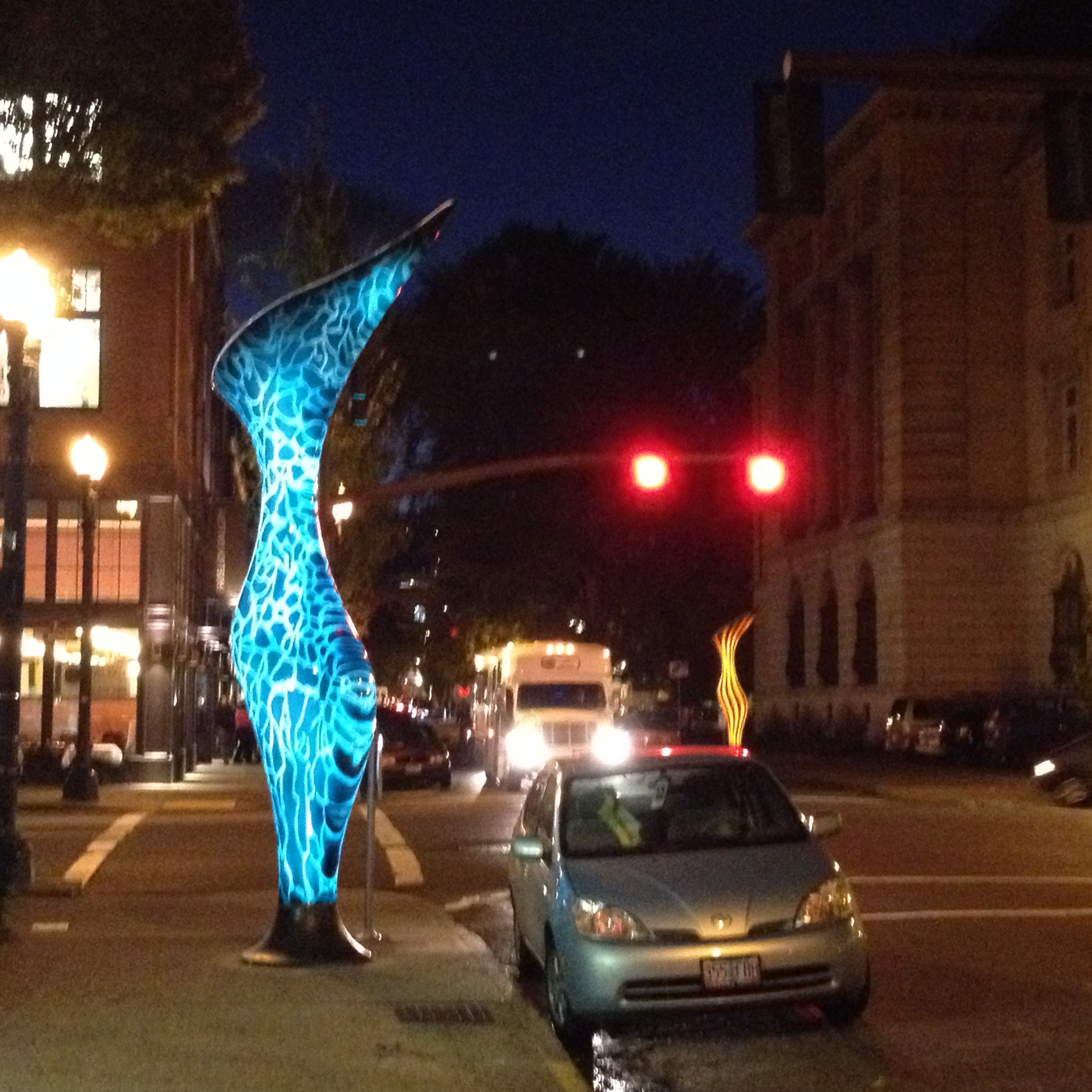
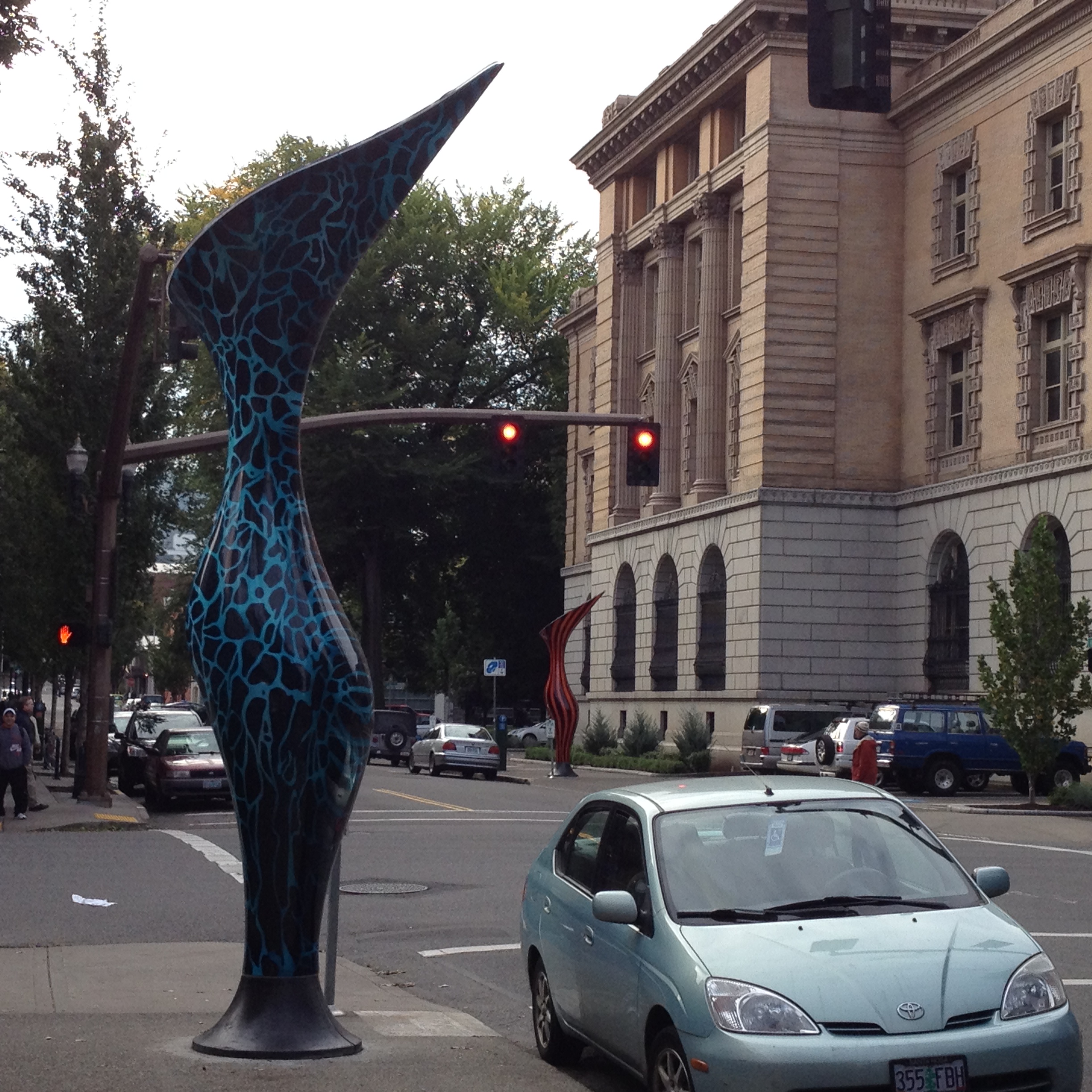
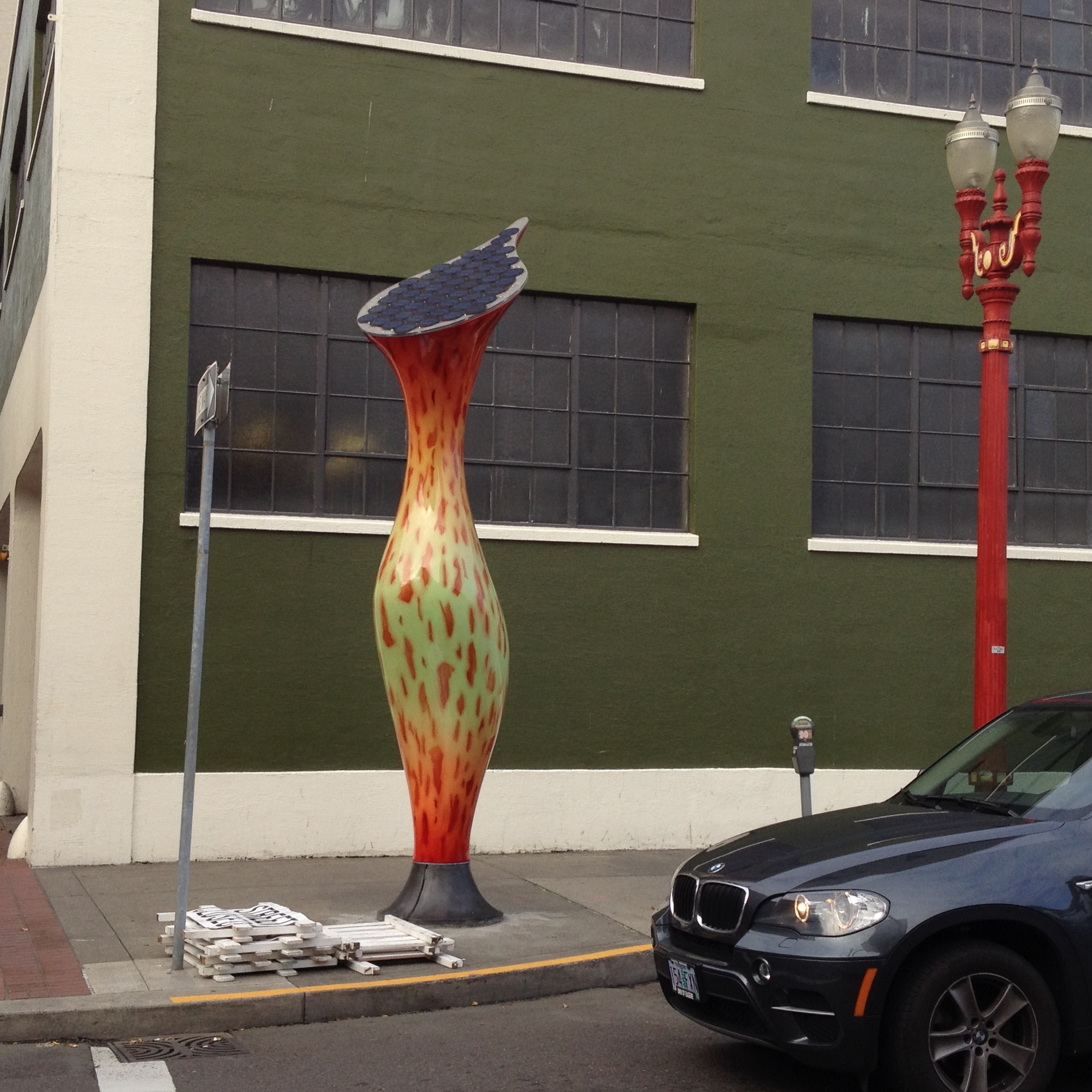
It has taken me awhile to get around to seeing Nepenthes, the four pieces in the Pearl by Dan Corson. I had seen pictures of them back when they were installed, but it wasn’t until one afternoon a couple months ago that I first noticed one of the pieces as I was turning the corner around Contemporary Crafts. It was only recently that I saw the pieces at night. 
20131003_6698

I’ve been puzzling about what I think of them. There’s something “OK” about them and yet they seem problematic.

I looked for some published thoughts about them and I found what I take to be an attempt at art criticism by  Richard Speer—a rant sans analysis about the work. Here’s an excerpt:

July 3rd, 2013 RICHARD SPEER

First, the atrocity: Dan Corson’s four-sculpture series, Nepenthes, installed along Northwest Davis Street in Old Town between 5th and 8th Avenues. Nearly 17 feet high, these bulbous eyesores are based on the nepenthe, a carnivorous tropical plant that eats insects, lizards and small rodents. Garish and cheap-looking, the sculptures could be props in a high-school staging of The Little Mermaid. In an outlet mall in Kissimmee, Fla., they’d fit right in. In the Northwest, they come across as dumbed-down knockoffs of Chihuly glass. At nighttime, when you wish they would disappear, the damned things glow in the dark thanks to photovoltaic panels.

One of Corson’s sculptures is only paces away from the entrance to Butters Gallery, a longtime Old Town fixture. Immediately after the piece was installed, creative director Jeffrey Butters took pains to distance the gallery from Nepenthes in a Facebook post that read: “UGH! Please know we were neither consulted nor involved in this debacle.” In person, Butters expresses his disdain even more colorfully. “I wish someone would run over them with a truck,” he says. “Everyone I know who’s seen them is basically throwing up. I want to put a sign on them that says, ‘Hey, the 1970s called, and they want their lava lamps back!’” [http://www.wweek.com/portland/article-20854-nepenthes_and_inversion_%2B__.html]

Oddly, some of the above gave me focus for my thinking. Speer says “the atrocity.” That would be “a highly unpleasant or distasteful object” according to my dictionary. These pieces don’t strike me as unpleasant. Could be that they are a bit too pleasant, not challenging enough, maybe. Maybe too tasteful (but then what is “taste?”). And if that’s how I’m seeing these pieces, they can’t be “eyesores” to me because they don’t fit my concept of “ugly.” They can’t be both overly pleasant and ugly. They aren’t aggressive or clumsy. They attempt to be graceful in a plant-like way (that’s the artist’s intention as I understand it). In that they are very unusual for big sculpture.

Then I consider whether these works are “garish and cheap-looking.” Garish: obtrusively bright and showy. Well, they don’t seem any more bright and showy than the cars on the street. It is hard to tell what is bugging Speer. Maybe they would be better matte black?

20131003_665420131003_6671

20131003_666820131003_6662

This one above is no more garish than the streetlamp. I know that Clement Greenberg hated it when sculpture was painted in colors, but these be post-modernist times.  And “cheap-looking” is a meaningless term, so that doesn’t help.

Aside: It is common for those not really involved in art to feel they are saying something meaningful by comparing an artwork to something they find unworthy, for example: “That looks like a pile of junk” (Think John Chamberlain, Richard Stankiewicz). Other examples: “the sculptures could be props in a high-school staging of The Little Mermaid. In an outlet mall in Kissimmee, Fla., they’d fit right in. In the Northwest, they come across as dumbed-down knockoffs of Chihuly glass”, “the 1970s called, and they want their lava lamps back.”  

Aside aside: I am reminded of a story about one of my art history profs. He was at an exhibition opening. Someone asked him about what he thought of the work. He wasn’t complimentary.  The person said, “Well, I think it is pretty clever, don’t you?” He replied, “I thought this was an art show, not a clever show.”

SOOOOO…My thinking is that the context is wrong. They do not live well on the sidewalk, especially in the muddle of Pearl/Chinatown. They would do much better in a plaza or garden.  They need space and now they are inhibited by signposts, street lamps and parked cars. All of those things inhibit seeing the work clearly in the same way that static inhibits hearing music on the radio.

That being said, they also function as big decorative sculptural objects, as street jewelry*. They do not bring up the “meaning” function of sculpture (for me).

And they don’t make me froth at the keyboard. Or cringe as I walk past them. I can live with them. As they are now, I find them OK.

Back in 1975, when Don Judd had a big minimal installation at Portland Center for the Visual Arts he said to me at the opening, “the problem with installations is that by the time you finish it it is too late to change anything.”

Same with public art.

* Fancy jewelry would not be appropriate with your grubby work clothes and maybe this street jewelry doesn’t function well in the grubby streets where it is.

Unknown's avatar

On Drawing: Mirrors at The Met

I’ve been very lucky, living about 3,000 miles from New York, to be able to visit the Metropolitan Museum of Art just about every year for the past 30+ years. Nowadays I plan to get there about lunch time (after taking the train from Connecticut into the city) and after gathering my thoughts in the cafeteria I spend a leisurely afternoon noodling around just seeing what might catch my attention.

Of course I enjoy revisiting big name masterworks, but it seems that the memorable (and photographable) incidents now are little things, little surprises tucked away in more crowded displays in vitrines.

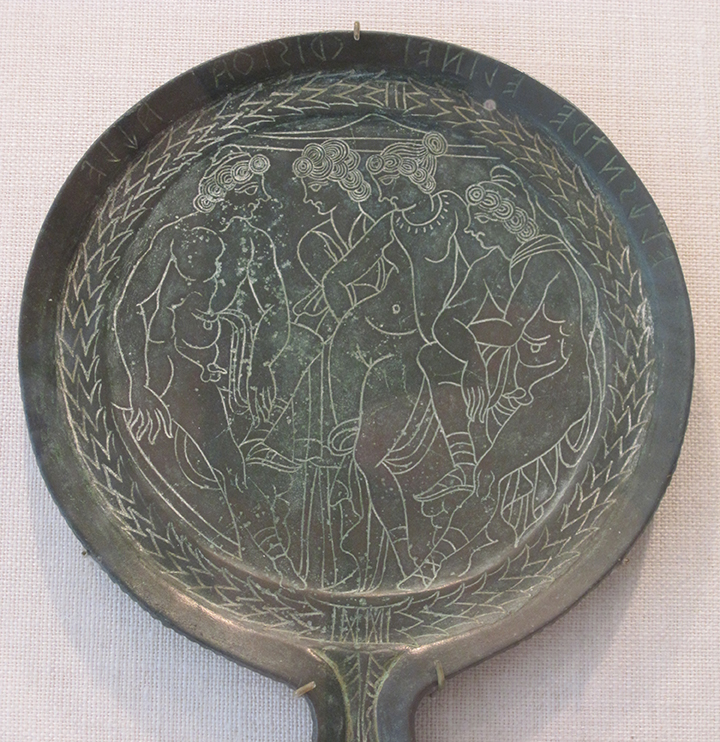
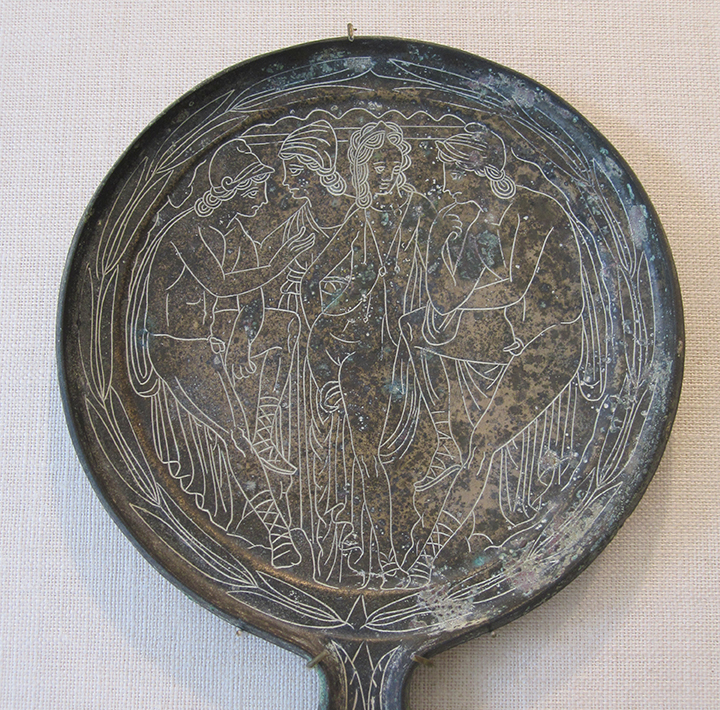
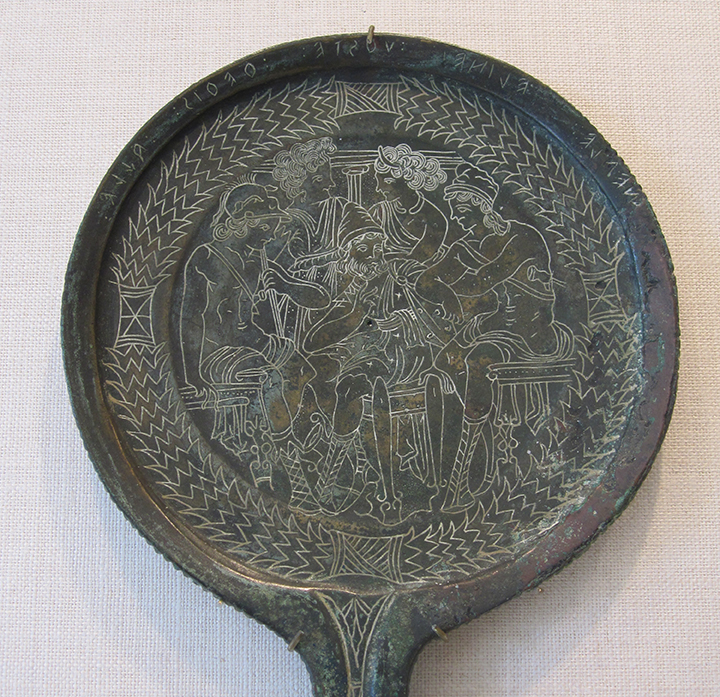
So here are some great line drawings, on the backs of Etruscan bronze mirrors, 3rd century BC.

Mirror a crop

Look at the descriptive quality of a few well chosen lines.

Mirror b crop

Look how that composition fits into the circle.

Mirror c crop

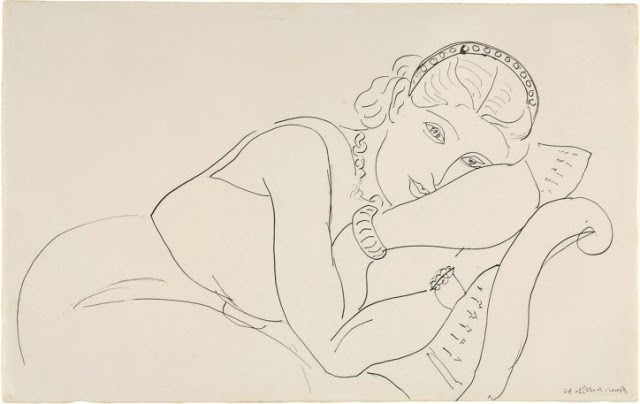
2,300 years before the loose lines of Matisse…

0205myra_matisse_2

…or the exactitude of lines by Picasso.

0803drfive9%20465x600

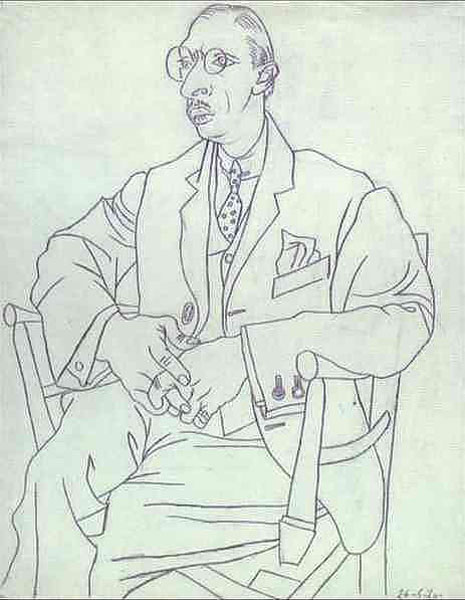
Who knew the Etruscans could draw like that?