Unknown's avatar

Poetry and Prisons

I’m not that interested in verbal poetry. When a poem does catch my attention it seems to be one that creates a verbal image of a visual image in very simple language, something that I “see” in my mind and places me with the scene—a new experience.

Like in Robert  Frost’s Mending Wall:

Something there is that doesn’t love a wall,

That sends the frozen-ground-swell under it,

And spills the upper boulders in the sun;

And makes gaps even two can pass abreast.


Or Bob Dylan’s Subterranean Homesick Blues:

Johnny’s in the basement

Mixing up the medicine

I’m on the pavement

Thinking about the government

The man in the trench coat

Badge out, laid off

Says he’s got a bad cough

Wants to get it paid off

Several years ago I came to the realization (finally) that the art that I enjoy the most tends to be that which gives me an instant of poetry, that makes me understand, or see, or feel something differently. An instant where I think anew about something. Robert Frank said something related to that:

“When people look at my pictures I want them to feel the way they do when they want to read a line of a poem twice.”

As I recall, my first notice of this came in looking at a small photograph by Rich Rollins (a colleague who teaches photography at Marylhurst University). It was a picture of a building that was unfamiliar to me. I asked Rich what building that was and he said it was the Fine Arts Building in downtown Portland—a building that I’d seen hundreds of times. But I hadn’t seen it the way Rich saw it and his photograph showed his seeing to me.

This is prologue to saying that I’m getting a similar  kind of experience with the current exhibition (through May 17) at The Art Gym at Marylhurst University (marylhurst.edu/theartgym).

TAG Talk pano o4 13

Opening day talk, April 21

Julie Green — The Last Supper: 500 Plates 

Buddy Bunting — The Prison Industrial Complex

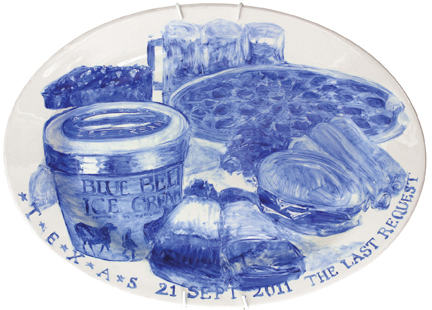
Julie Green shows 500 plates depicting the actual last meal requests of condemned prisoners. Each plate, and it’s description, is a haiku-like instance where we are given a straightforward  image painted in a matter-of-fact way, on a plate, in blue—a modern delftware look.
Blog Green-TX-21sep2011

But each instance draws us in to consider the ultimate individual humanity of the requester. Each of these people who we have decided to deprive of life becomes someone we must think about now. And each of us will think in our own way, in our own time. It is important that we see 500 of these plates together, to somehow, in each case, pull an individual from a crowd.

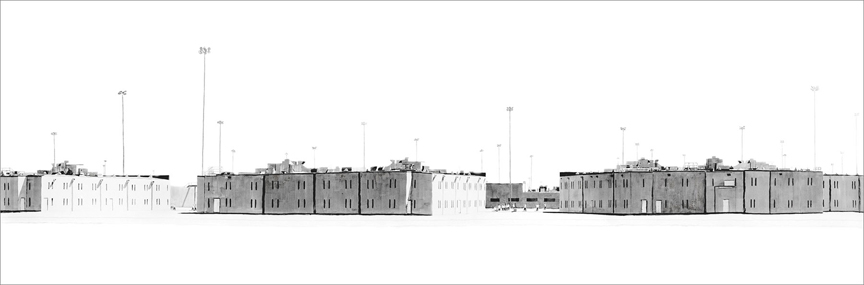
Buddy Bunting gives us the anonymity of the containers for the prisoners in huge spare works on paper.
Blog-bunting-5-press


Some of these bleak views are 20-30 feet wide. The wide open spaces of the west, with the boxed enclosed spaces for prisoners.

We have precedents for this kind of straightforward presentation in Ed Ruscha’s books Twenty-Six  Gasoline Stations or  Every Building on the Sunset Strip, and in tract house photos by Lewis Baltz. In all of these cases the normally anonymous is presented and we are beckoned to pay attention. With Bunting’s works we consider the prison, not the romanticized prison of Piranesi (where we might imagine the screams of the tortured):

the-arch-with-a-shell-ornament


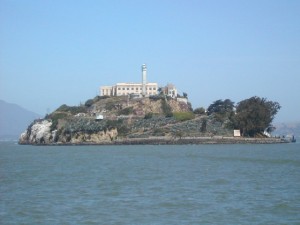
Or the scenic view of Alcatraz.

alcatraz-300x225


In Bunting’s works everything is silent and nothing is beautiful except for the quality rendering by the artist.

It is the bare understatement—down to the key point of focus, with no frills—in the works of both of these artists that allows meaning to be coaxed from the mind of the viewer.

“Less is more.” Ludwig Mies van der Rohe


ps. It is interesting what one learns when fact checking what seems to be surely known. Evidently Robert Browning used the line “Well, less is more, Lucrezia” in his poem Andrea Del Sarto, Called “The Faultless Painter”  in 1855. I can’t hardly begin to read that poem.

Unknown's avatar

Sullivan, Cicero and Shutters

Architect Louis Sullivan said “form ever follows function.”

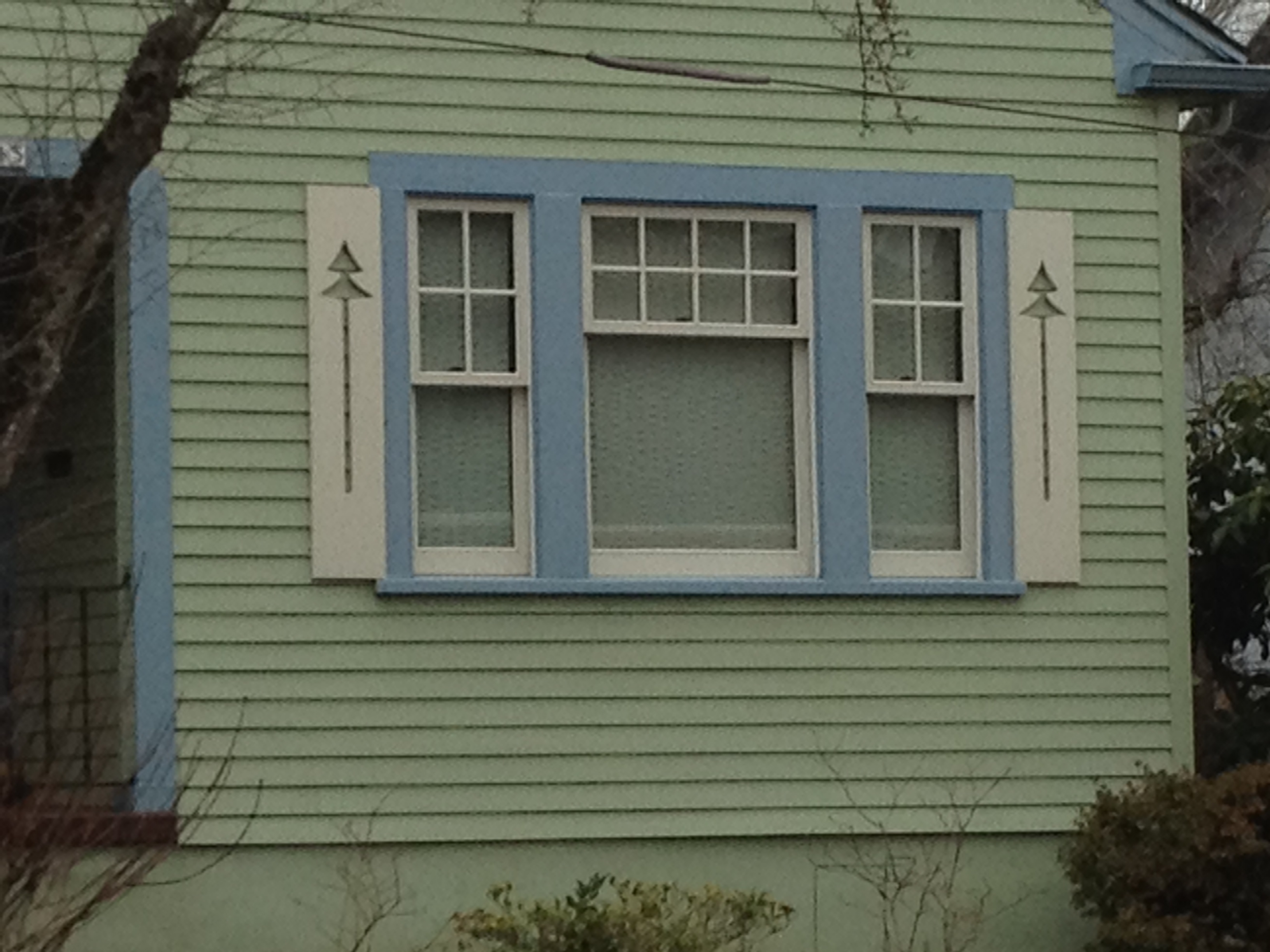
Shutters for windows serve a couple utilitarian functions. One is to protect the windows from flying storm debris. Another is to provide privacy, security and ventilation when the windows themselves are open. In order to do this the shutters are hinged so that they can open and close, and they are made to fit the window opening tightly.

IMG_0602IMG_0603

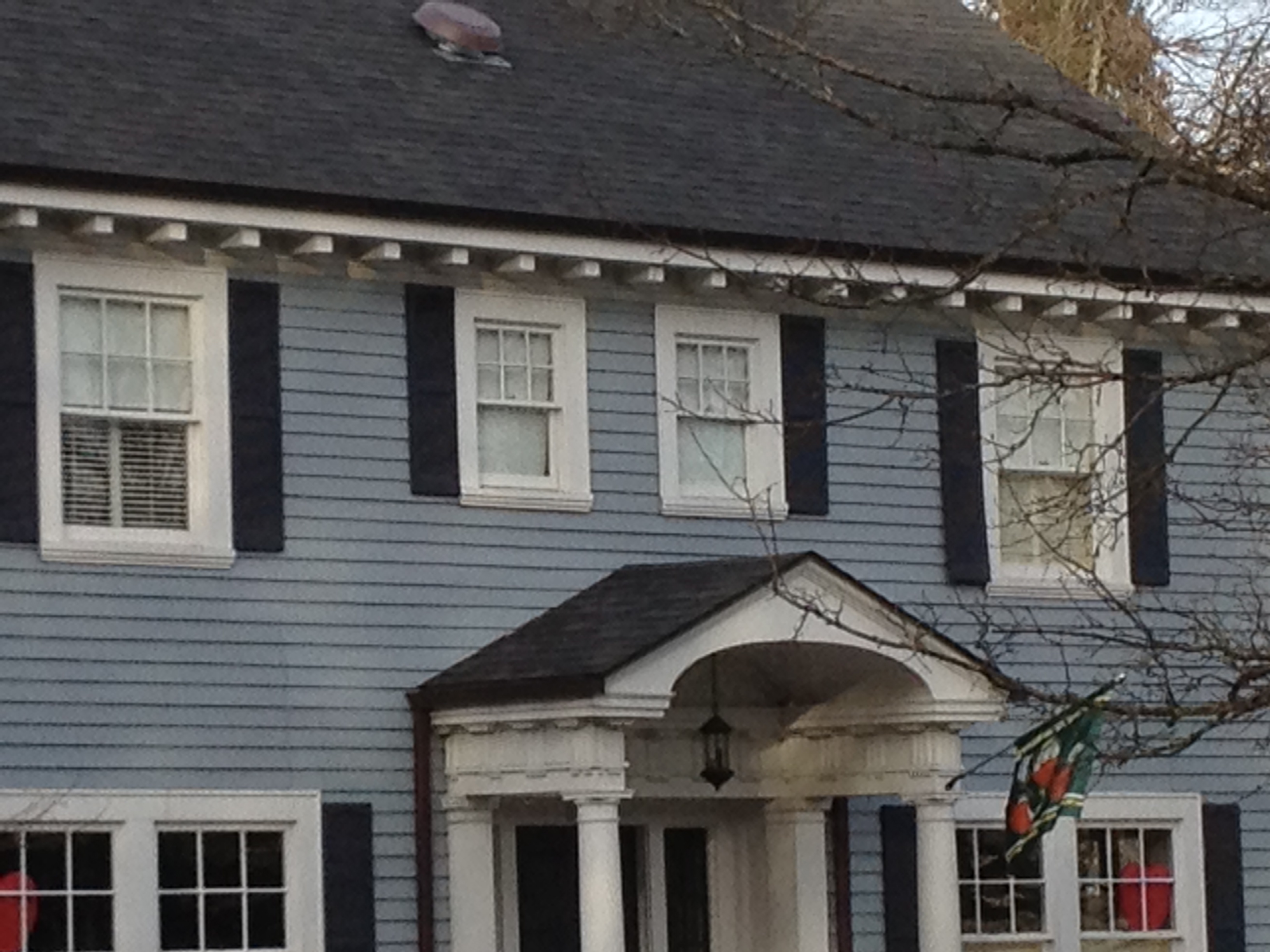
Nowadays there is another function: decoration. And, perhaps nostalgia. The function that required hinging seems to have been lost, and the original link between form and function is lost.

In some cases this decorative function—separated from the protective functions requiring hinging— seems to part of the original design of the house.

IMG_0635IMG_0617

But then there are the most common examples where store bought shutters are tacked onto houses in ill fitting ways.IMG_0638

Clothing analogy: pants way too short.

And there are those that can’t be explained by any understanding of shutter utilitarian function:

IMG_0615IMG_0636


I’ve come to believe that this is an example of what the Roman philosopher/statesman Cicero was talking about over 2,000 years ago:

In the estimation of poems, paintings, and a great many other works of art… ordinary people enjoy and praise things that do not deserve praise. The reason for this, I suppose, is that those productions have some point of excellence which catches the fancy of the uneducated, because these have not the ability to discover the points of weakness in any particular piece of work before them. And so, when they are instructed by experts, they readily abandon their former opinion.  (from On Duties)

People are looking for some sign of a link to older american architecture. This may not be the “point of excellence” that Cicero refers to, but it is a sign of meaningfulness—though misunderstood.

And misused…

IMG_0613

Wildly misused.

Unknown's avatar

“Art is useless” — Oscar Wilde

I like Letters of Note (www.lettersofnote.com), and often read the Random Letters.

Saw this (from 1890) today and it seems relevant to this blog:

16, TITE STREET,

CHELSEA. S.W.

My dear Sir

Art is useless because its aim is simply to create a mood. It is not meant to instruct, or to influence action in any way. It is superbly sterile, and the note of its pleasure is sterility. If the contemplation of a work of art is followed by activity of any kind, the work is either of a very second-rate order, or the spectator has failed to realise the complete artistic impression.

A work of art is useless as a flower is useless. A flower blossoms for its own joy. We gain a moment of joy by looking at it. That is all that is to be said about our relations to flowers. Of course man may sell the flower, and so make it useful to him, but this has nothing to do with the flower. It is not part of its essence. It is accidental. It is a misuse. All this is I fear very obscure. But the subject is a long one.

Truly yours,

Oscar Wilde

Unknown's avatar

Quotation #2

Laurie Fendrich is a painter who teaches at Hofstra University and I regularly read her blog which unfortunately seems to be on hiatus since last August. 

Art is not the icing on the cake of civilization. Art is one of the bases of civilization. In the beginning were cave paintings, not cave hedge funds, or cave economic texts, or departments of “Cave Studies.” And after the rise and fall of any particular civilization, who (other than historians) still thinks about its economic system, or even its military might? What mostly lives on for people in succeeding civilizations are art and ideas. Those civilizations which made no art, or spurned philosophy (think Sparta) quickly turn to dust and become only the stuff of legend.

Laurie Fendrich

Unknown's avatar

Happy Sequestration!

I’m reposting THE LUCKY TAX with a little amendment:

If you question the wealth of the rich, folks will often say that they got there through “hard work.” Probably true.

But they are also lucky.

They might be lucky enough to be 6’8″ tall and athletic.

Lucky to interested in software programming instead of the craft of buggy whip manufacturing.

Blessed with smart caring parents instead of abusive slobs.

Or maybe they guessed right in the casino of the stock market.

Or maybe they have a high IQ.

Mainly it is being in the right place at the right time with the right ability (and I’m proposing that abilities are fundamentally based in luck).

Let’s check out the remuneration for simple “hard work.” The national minimum wage is $7.25 per hour. Let’s say minimum wage workers don’t work very hard (which of course we know is untrue, but for the sake of the argument).

Let’s say our rich person works a hundred times as hard (not possible, but for the argument). So they should make $725 per hour.

Now the minimum wage worker is working 40 hours per week (but may need more than one job to survive“…roughly one-third of the estimated 20,000 homeless people in Santa Clara County [the heart of Silicon Valley] had full-time jobs.” Richard Florida).

However the rich person works really hard, twice as long: 80 hours per week. 80 hours x $725 per hour = $58,000 per week for that extra hard, extra long work.

52 weeks x $58,000 = $3,016,000.

So, with this calculation, if one makes more than $3,016,000 per year it can’t be just through hard work — it is a result of luck.

Proposal: Any income above that point should be subject to a special “Lucky Tax” because it wasn’t gained through hard work, but through luck.

I am not begrudging luck, just saying that if we value hard work more we should tax it less — and tax luck more.

Amendment: So of course it is impossible for one person to work 100 times as hard as another, so if we say they work just 50 times harder the Lucky Tax would be levied at $1,508,000. Someone who makes $1,000,000 per year, needs to work 33 times as hard (and 80 hours per week) to earn the million just through hard work

So when President Obama suggests raising taxes by closing loopholes for “millionaire and billionaires,”  he’s supporting the Lucky Tax.

Unknown's avatar

Khan Academy on Rauschenberg’s Bed – Wrong

Khan Academy is a place where you can “Learn almost anything for free.” In the case of their presentation on Robert Rauschenberg’s Bed, 1955, you get what you pay for.

RR Bed

Here’s a link to the short video: http://smarthistory.khanacademy.org/rauschenbergs-bed.html

Dr. Beth Harris and  Dr. Steven Zucker discuss the work for just under five minutes. I have to say that their presentation demonstrates little actual critical thinking or research about the artwork.

They begin by referring to the work as a “combine” as if that is a standard art historical category. They do not mention that Rauschenberg invented the term (not the word itself, but the art term) “combine” specifically to describe this kind of combination of painting/sculpture that he was making.

Then, Zucker says, “Johns and Rauschenberg were actually thinking about their art as between art and life and what is that narrow space between the two.”

Well…Rauschenberg said,  “Painting relates to both art and life. Neither can be made. (I try to act in that gap between the two.)” He didn’t say there was some kind of “narrow space.”

And Jasper Johns never said anything like that. Sure, “Johns and Rauschenberg” were the enfants terribles or dynamic duo of the late 1950s, but the viewpoint/outlook/meaning in their work is very different. It seems that Zucker isn’t familiar enough with the work of Johns and Rauschenberg to notice the gap between the two.

Then they have the revelation that the “bed,” in its real life, was once horizontal, and as an artwork it is presented vertically! Well, Jackson Pollock painted with his canvas laid  horizontally on the floor—and then his paintings were presented vertically. Must be some kind of relationship there! And there are paint drips! (Pollock was Jack the Dripper!)  Zucker goes so far as to say, “And this [the Pollock connection] is a reference that Rauschenberg wanted you to come to. This artist wanted you to be thinking about Pollock and this is really a confrontation with Pollock.”

Where the hell did he get that idea???

I’ve never seen such a statement from Rauschenberg in any literature.

If you want to connect Rauschenberg with Abstract Expressionism that is fine (and Barbara Rose has done a good job with that). But if you want to pick an AE artist to connect with Rauschenberg, make it Willem de Kooning! After all, it was de Kooning who gave Rauschenberg the drawing that he erased (Erased de Kooning Drawing, 1953, collection of San Francisco Museum of Modern Art). And, more importantly, for anyone who actually looks and thinks—Pollock’s drips land on the floor and solidify there. De Kooning’s drips ooze down from the brushstroke that sweeps across the canvas when it is oriented vertically. And in Bed, Rauschenberg’s brushstrokes have obviously been applied when the “bed” was vertical! And the drips drip down.

Zucker’s comment relating Rauschenberg to Pollock would make the uninformed viewer of the video (and that, I think, is the intended viewer as these videos seem to be intended to be elementary/introductory) think that Bed is a singular work in Rauschenberg’s career in which he decided to utilize the AE “style” in order to comment on it, instead of understanding Bed as part of a continuum from the Black and  Red paintings of 1951-53 through Charlene,1954, and Rebus, 1955, to the wonderful Monogram, 1955-59 (the stuffed angora goat with a tire around its midsection). Other than the fact that Bed is made from quilt/sheet/pillow, how is this different from Rauschenberg’s approach to his other work of the period? (It isn’t.)

rauschenberg_monogram_1955-59


Zucker finds that Rauschenberg, in utilizing what Zucker thinks is an act of copying the AE style, is “self-consciously imitating the idea of the authentic.” Harris responds, “By virtue of copying what is supposed to be someone else’s individual style.” Seems to me that Zucker  and Harris are looking through some strangely distorted art theory post-modernist lenses here, so that they don’t understand Rauschenberg as a painter who actually enjoys the materials he uses as much  as any other painter of the time. The paint in Rauschenberg’s work is applied with Rauschenberg’s actual style, not an “imitation” of a generic style. Or maybe Z&H think that anyone who lets paint drip after de Kooning and Pollock is inauthentic.

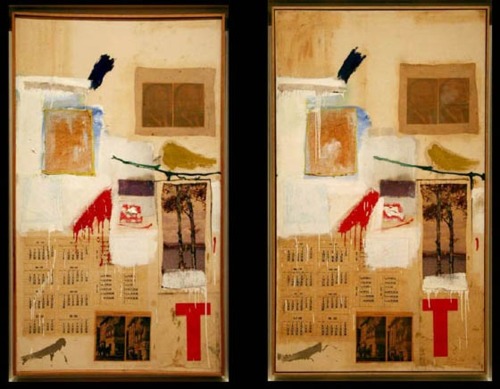
If they actually wanted to discuss what seems to be Rauschenberg “comment” on AE spontaneity, they should have utilized Factum I and Factum II from 1957

tumblr_lhuwu47jWT1qdbp0l

Which seems to be a comment on original/copy, similar/different, same/not same, etc.

And finally (not that there isn’t more that could be argued with in the video)…

Zucker says, “That’s why Johns and Rauschenberg are sometimes referred to as neo-Dadaists because they’ve picked up the mantle, the flag, of people like Duchamp…”

In her fine bio of Rauschenberg, Mary Lynn Kotz says, “He and Johns were called neo-Dadaists by a number of critics. He always resented the label.”

Anyone but careless speakers would have noted that.


*A really great discussion of Rauschenberg’s work is Encounters with Rauschenberg by Leo Steinberg, unfortunately out of print, but available used at a reasonable price.

Unknown's avatar

Decision making

Back in the olden times, when I was in college, we didn’t register for classes online. We stood in long lines in the gym at Portland State and waited our turn to hand paperwork to an actual person. That was in order to register for one class. Then you’d get into another line to register for another class. In order to keep the lines manageable each student was given a time during registration day when their registration packet would be available. If you were lucky the registration lottery would give you an early time so that all your desired classes would be available.

In the fall of 1968 I got a late registration time.

I was a sophomore graphic design major and I needed the required Lettering class in order to meet prerequisites in the program. By the time I got to the line, all of the Lettering classes were closed.

I was 19 years old and too naive to know that I could probably beg a teacher to get in because I really needed the course. So, I made the decision to be a painting major instead.

And on that decision turned the whole of my life since.

Otherwise I would not have had the experiences enumerated on the “About” page on this site. Nor would I have met most of the friends that I now have.

And I probably wouldn’t have met my wife, Susan, or our two children.

So that’s how key decisions are made.

Unknown's avatar

Cranky Complaint #1: Lazy Writing

Here’s an easy way to say something meaningless as a space filler

For quite awhile now I’ve noticed, especially with the evening news (any channel) that oftentimes “everyone” doesn’t do something.

In Saturday’s Oregonian, in the article Will the 4 percent rule of thumb leave retirees empty handed? we find that on one point,Not everyone agrees.”

On page one of The Chronicle of Higher Education, February 8, we see that,  “Wilson College will admit men after 144 years, but not everyone is happy.”

If you Google “not everyone agrees” you will find, on the first page:

Reaction to immigration reform deal: Not everyone agrees with path 

Not everyone agrees with study on snuggling with pets 

Not Everyone Agrees That Windows 8 Is a Failure

Memorial Day music: Not everyone agrees on what sounds patriotic

New York Sun editor John B. Bogart  said, “When a dog bites a man, that is not news, because it happens so often. But if a man bites a dog, that is news.”

Let me know when everyone does agree.